
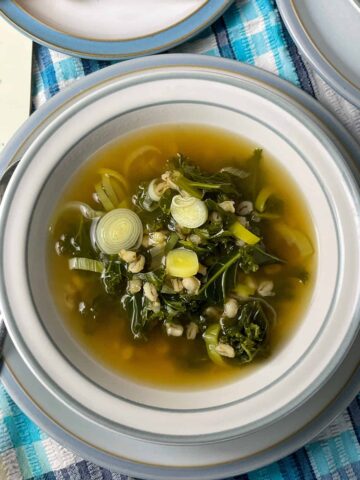
This British Spring Greens Soup recipe is prepared with early spring cabbage leaves and is perfect for light, refreshing and delicately flavoured spring and early summer meals. In Britain spring greens are actually young cabbages that have not developed the inner core, whereas in the US spring greens can be any leaves that are ready to be picked in spring such as spinach, arugula, beet greens or kale. For this recipe you can use any green leafy vegetable you prefer, for example why not make good use of those beet greens and prepare a pot of - Beet Greens Soup or Collard Greens Soup. If preferred you can blend the soup to a wonderfully wholesome green colour. Also, this soup recipe is not just for spring or summer, it's pretty delicious in autumn/fall or winter - just use seasonal green vegetables.

British Spring Greens Soup is a delicate flavourful broth which features spring green leaves along with carrot, celery, and peas. It's low in calories, low-fat, can easily be no-oil, and is perfect for nourishing light meals for vegans, vegetarians, plant-based diets, flexitarians, omnivores, carnivores, gluten-free diets, and anyone and everyone who just loves tasty green soups!
Jump to:
What are spring greens?
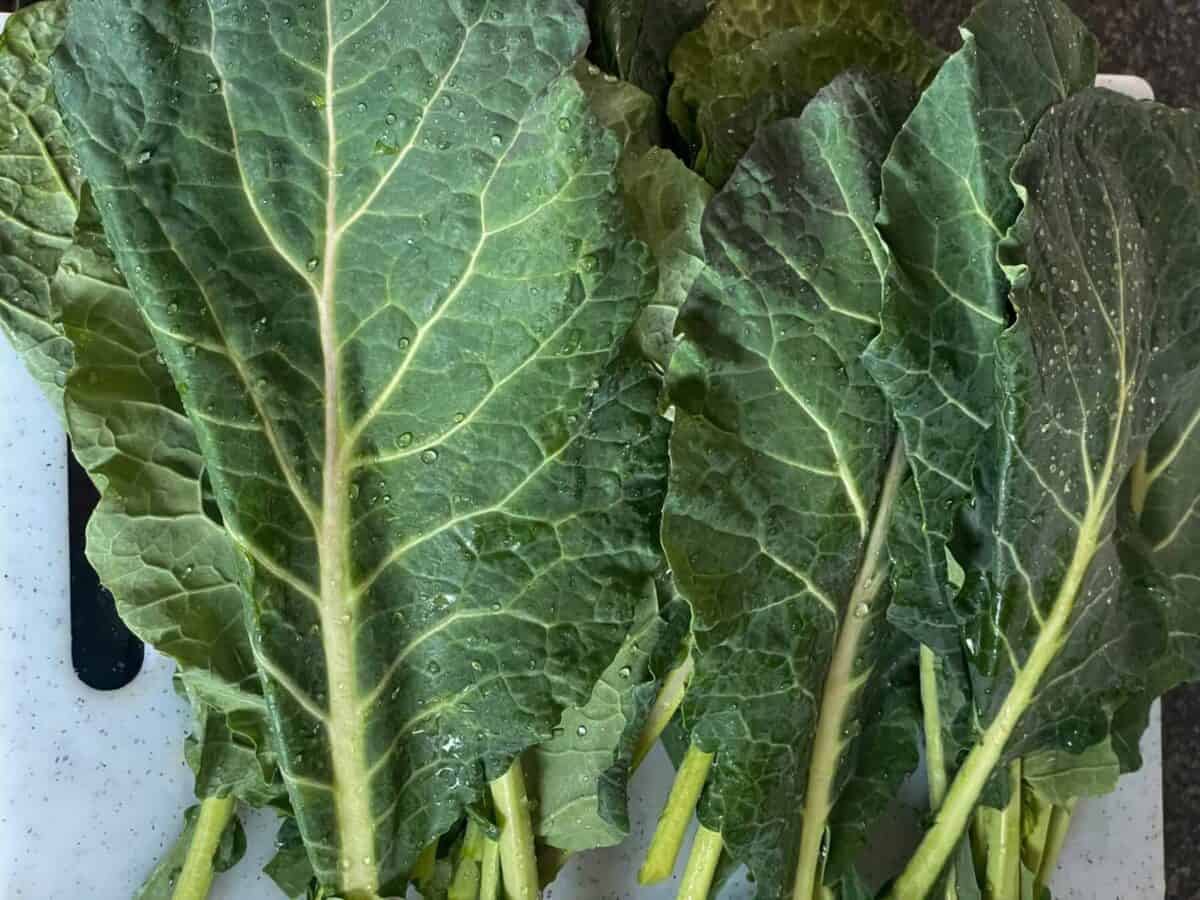
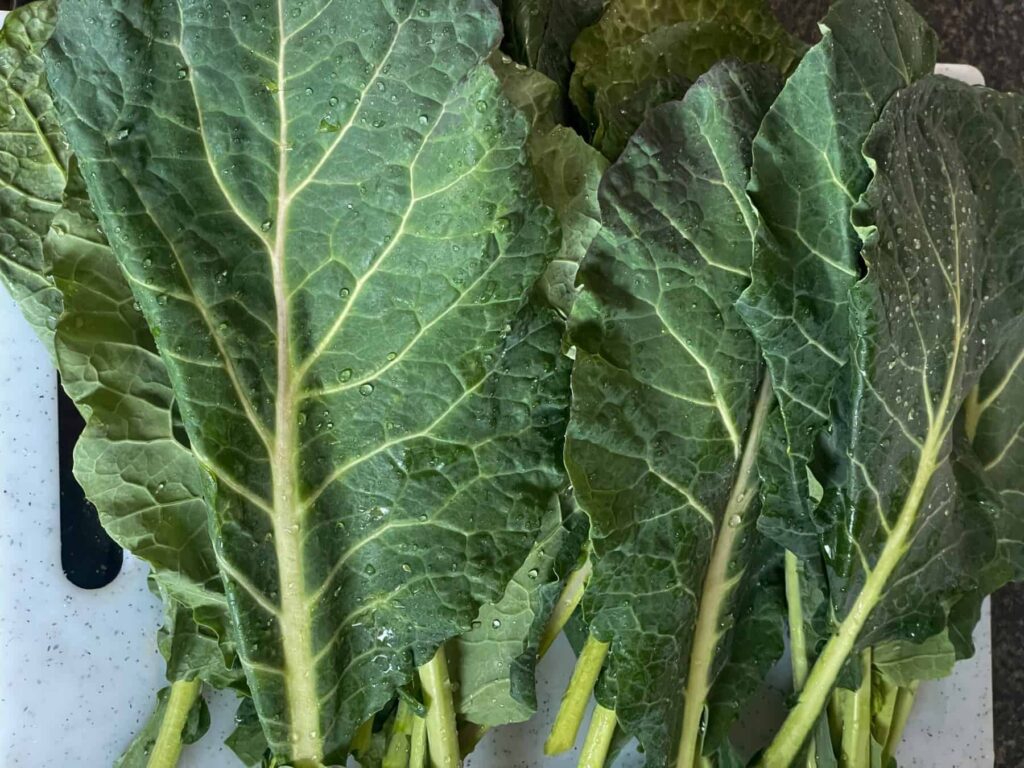
Spring greens are young cabbages, that are commonly sold in British supermarkets, that have not had the chance to form an inner core. Instead, they grow in a more loose and open formation and the leaves are usually broad and may have a more tender texture compared to other types of cabbage. They are called "spring greens" because they are often harvested in the spring, but they can also be available at other times of the year.
Spring greens can be used in a variety of dishes, including soups, stews, curries, casseroles, stir-fries, salads, steamed, and as a wrap for fillings instead of cabbage leaves such as for stuffed cabbage recipes.
What do spring greens taste like?
Spring greens have a mildly peppery, earthy taste, that is less intense than kale but more pronounced than spinach. This makes them quite versatile in cooking, as they can handle strong flavours and seasonings but can also stand alone as a side dish - cooked and served up with just a bit of salt and pepper, and perhaps some melted butter. Although as we are a plant-based family we would use vegan butter but any butter or margarine would do.
Origin of leafy greens soup
People have been using seasonal greens in soup for many centuries and often harvested the greens growing wild in hedgerows, fields, and gardens - such as nettles and dandelion leaves. Cabbages and kale are some of the oldest cultivated vegetables and were common during the British medieval times. Spring greens are always available for sale in British supermarkets during spring and early summer and they are a nice budget-friendly option as when in season a big bag is quite inexpensive.
Historically, green leafy vegetables and wild herbs were often seen as a "poor man's food," as they were easy to forage and bulked out a nice pot of pottage, stew or soup. In Scotland, cabbages and kale are able to withstand the harsh winters and be ready for harvesting in the spring. Adding these green vegetables into a sustaining soup or pottage was a way to make the most out of limited ingredients especially over the colder months.
Other variations of green leafy based soups can be found in home cooking around the world especially the Mediterranean which has plenty of tasty green soups such as the traditional Italian Cabbage and Bean Soup which can also be prepared with kale.
Countries like Russia, Poland, and Ukraine also have their own versions of green soups, known as "sorrel soup" or "green borscht,". Also, Asian cooking feature soups with various types of greens, including bok choy, or Napa cabbage, or spinach such as the tasty ''Chinese spinach soup''.
Our spring greens soup recipe
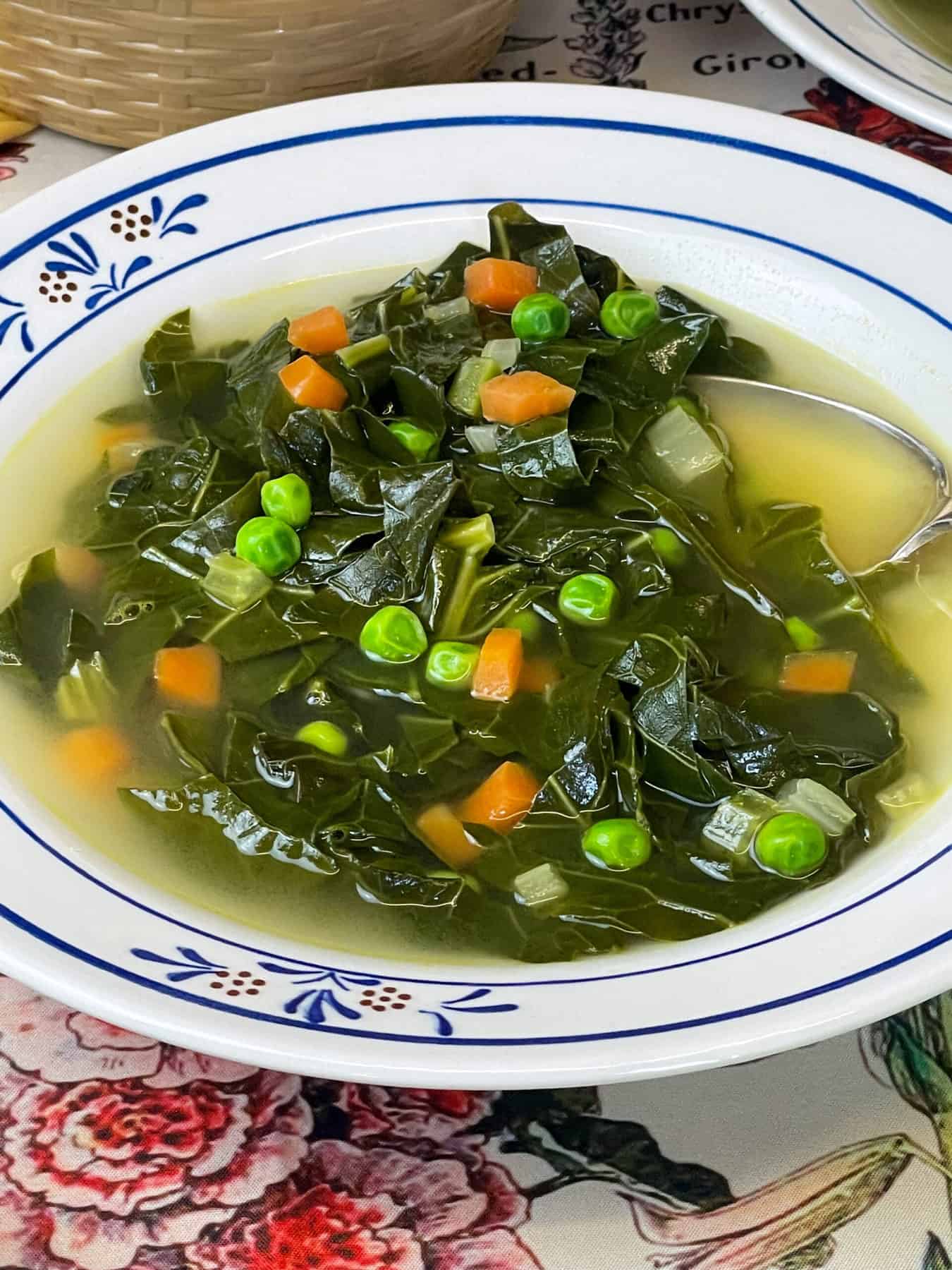
Our Spring Greens Soup recipe is both simple and quick, featuring just a few ingredients as we wanted to hero the humble spring green as it often gets overlooked for other varieties of cabbage. With our soup recipe you can have a pot of delicious wholesome green soup ready in under an hour. Even though we use spring greens, you can switch these out and use another green leafy veg such as beet greens, collard greens or perhaps savoy cabbage.
Our soup is delicately flavoured in order for the spring greens take centre stage and the broth is incredibly fresh tasting and practically begs to be slurped! On the second day, we experimented by blending the soup to see how it would affect its flavour and texture. The result was equally delicious, particularly when we added a drizzle of plant-based cream and a sprinkling of crispy, toasted almond flakes.
Before blending, we added a few splashes of plant-based milk and we used an immersion blender to create a lovely, silky, creamy texture.
It's worth noting that this recipe is both onion-free and garlic-free, not because we have anything against these vegetables but because we wanted the fresh flavours of the green leaves to shine, and besides many people are allergic to onions and garlic so require onion or garlic free recipes.
However, if you'd like to include them, feel free to add a diced onion and a few cloves of diced garlic, or perhaps some garlic or onion powder.
Ingredients
The ingredients you will need for this soup are - spring greens or an alternative, diced carrots and celery, peas, vegan butter [or extra vegetable stock if preparing added fat-free or oil-free soup] vegetable stock, sugar, and apple cider vinegar.
As we are a plant-based family we don't eat animal-based ingredients so all our ingredient suggestions are for vegan ones such as vegan butter or margarine, and vegetable stock. However, if you have different dietary requirements then use whatever ingredient you normally use.
How to prepare
This is a very homely and rustic soup that makes good use of spring greens when they are in season and sold very cheaply. However, the spring greens can be replaced with any other green leafy vegetable that you have such as - beet greens, cabbage, kale, collards, etc.
The soup can be blended or left chunky.
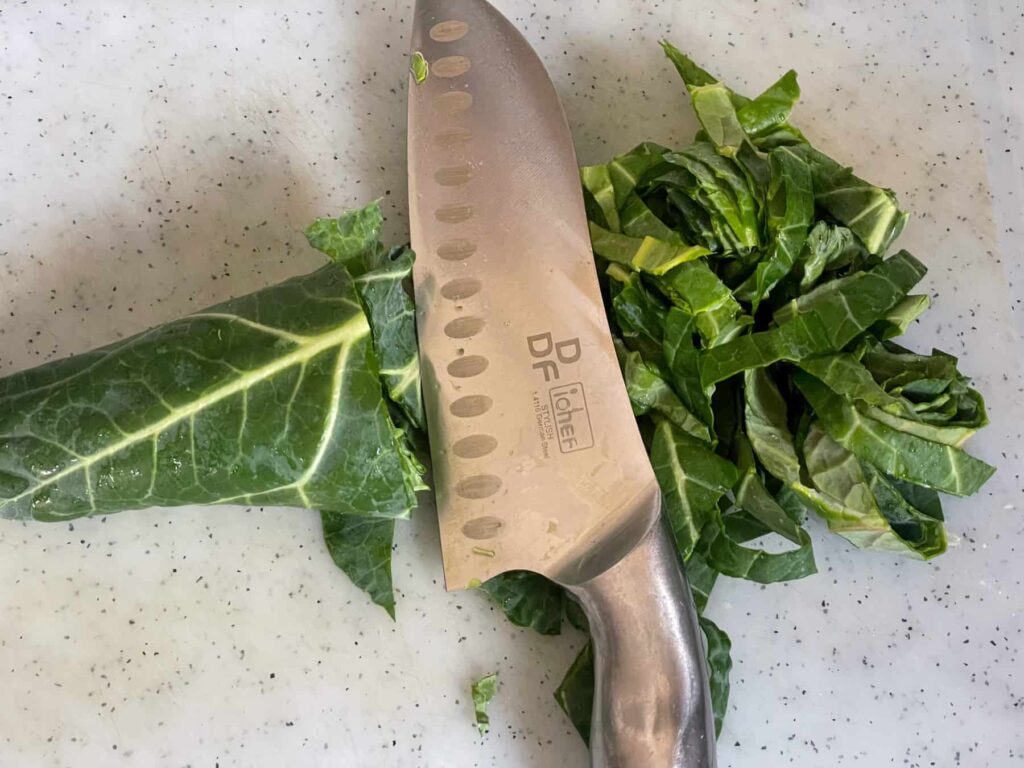
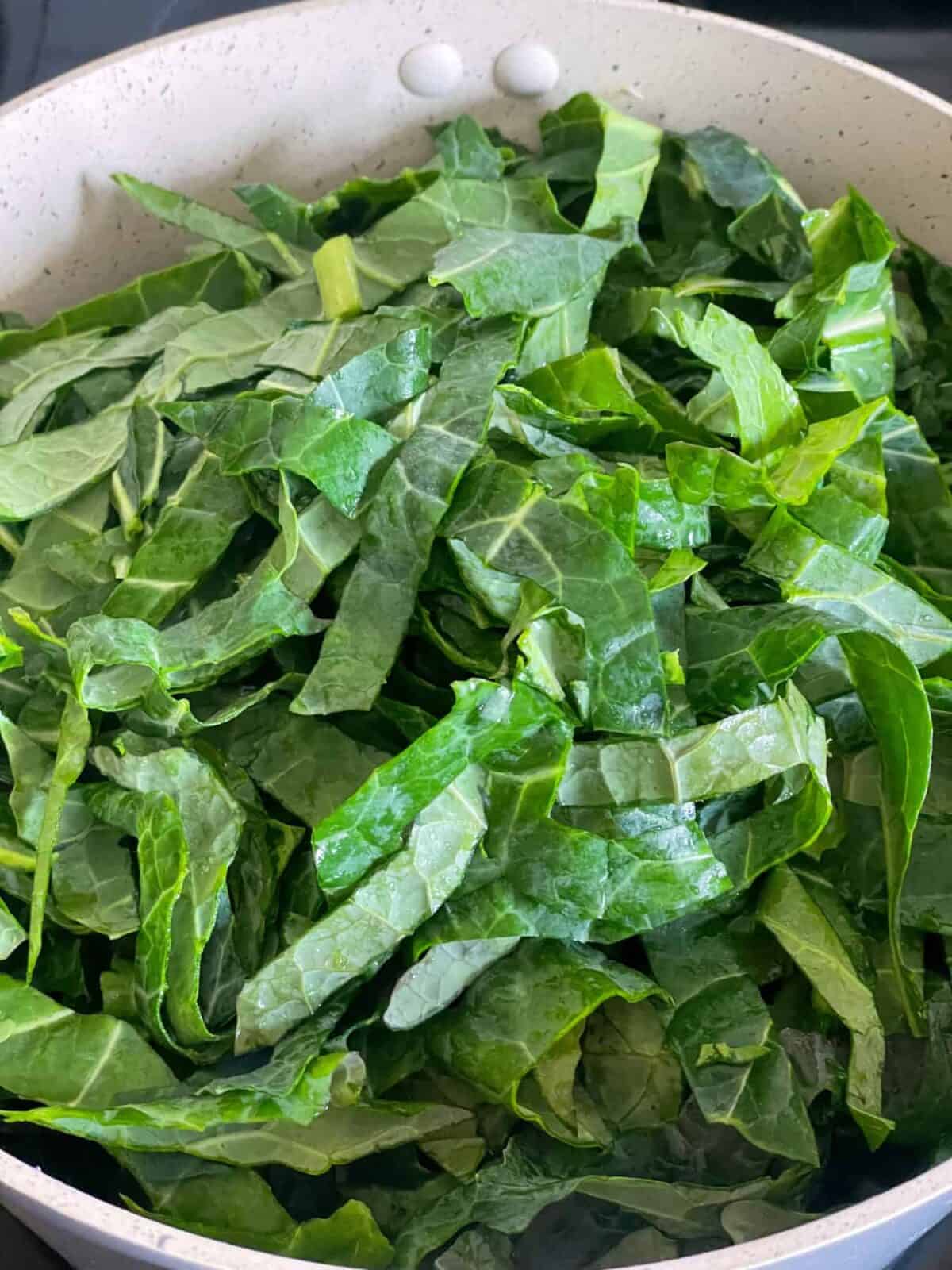
Step 1: Prepare the spring greens by removing any tough stalks, then folding a few leaves together and shredding the leaves to the desired size.
Step 2: If you are going to blend the soup you can leave the leafs chunkier but if the soup is to be left chunky then shred the leaves finer.
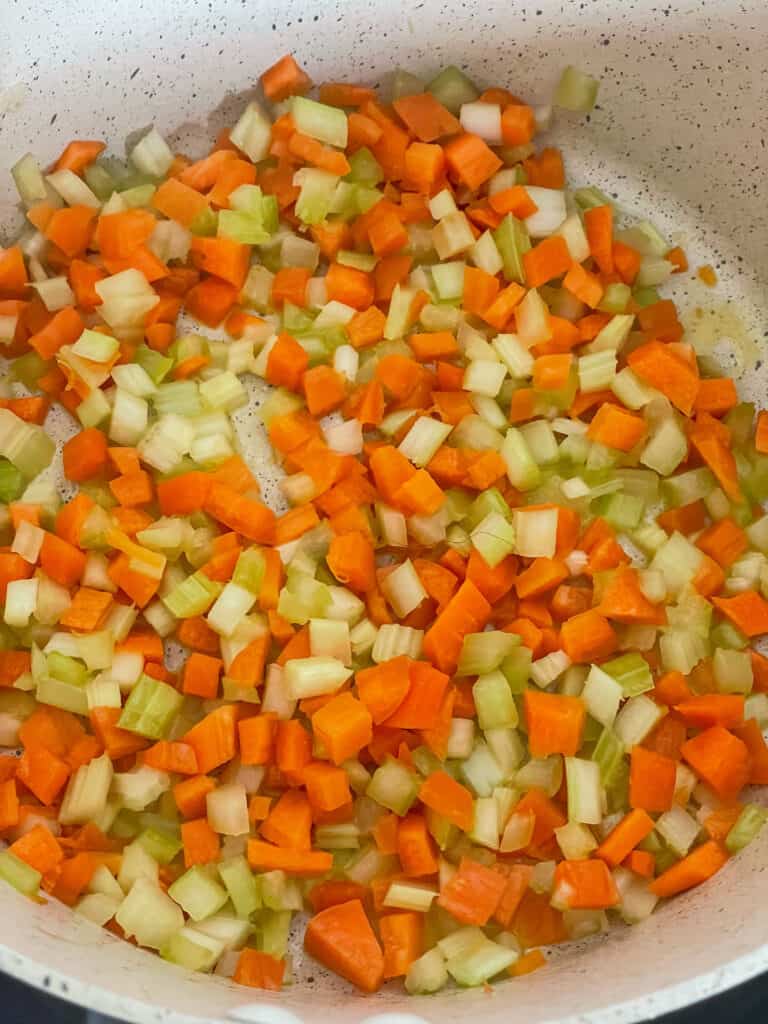
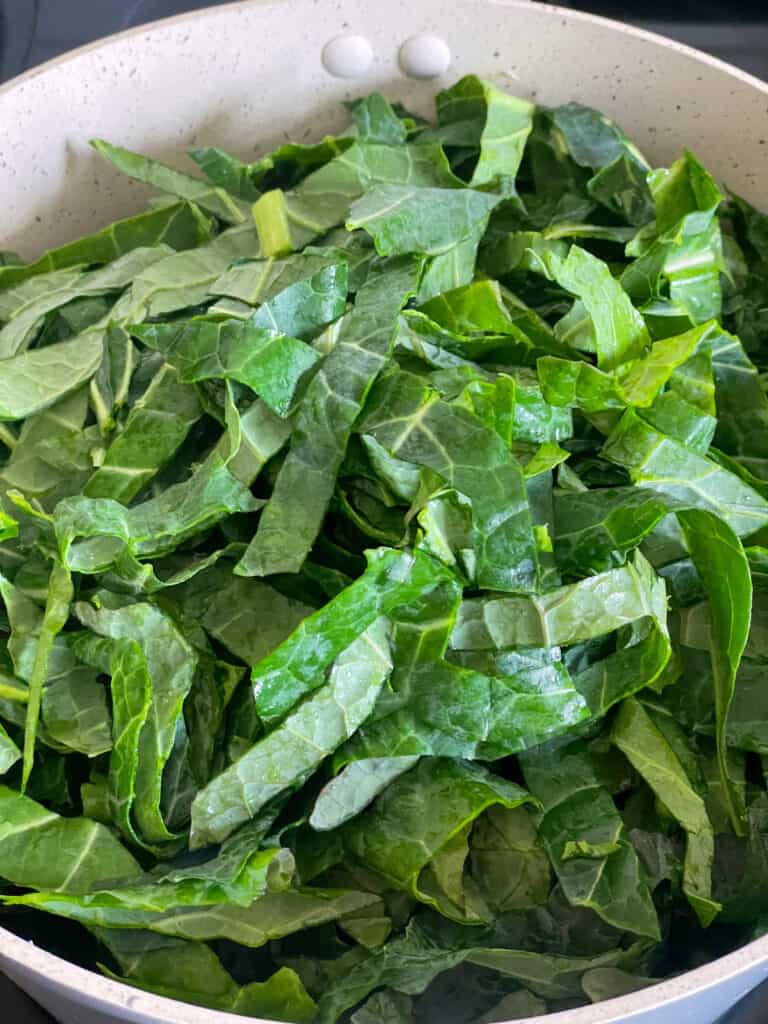
Step 3: Cook the carrot and celery in the melted butter for 6 minutes. Or heat a ½ cup of vegetable stock and use that to cook the vegetables.
Step 4: Add the shredded spring green leaves.
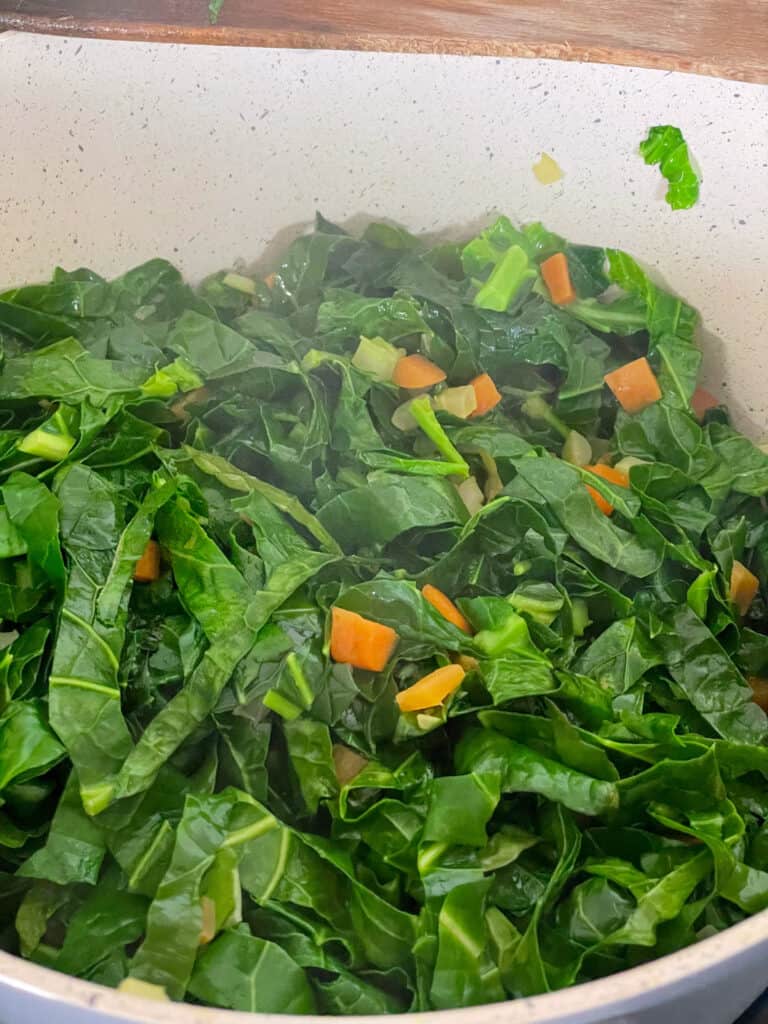
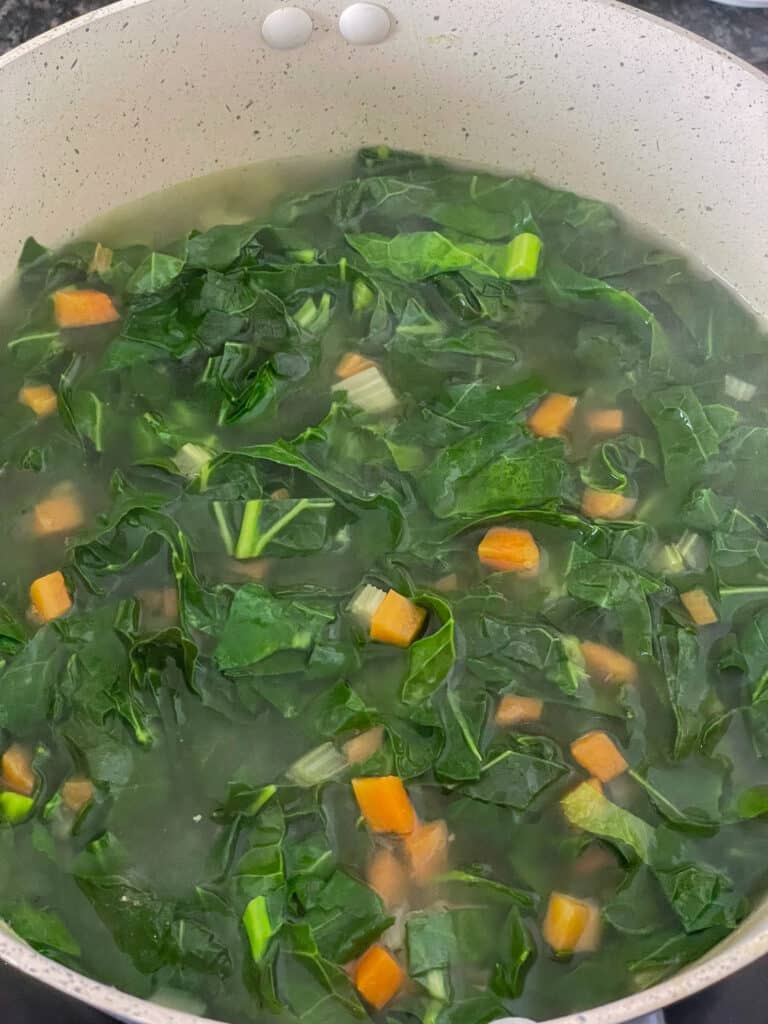
Step 5: Stir the carrot and celery through the wilting leaves and cook for around 3-4 minutes.
Step 6: Pour in the vegetable stock and sprinkle in a little salt and pepper.
Step 7: Simmer gently for 8 minutes.
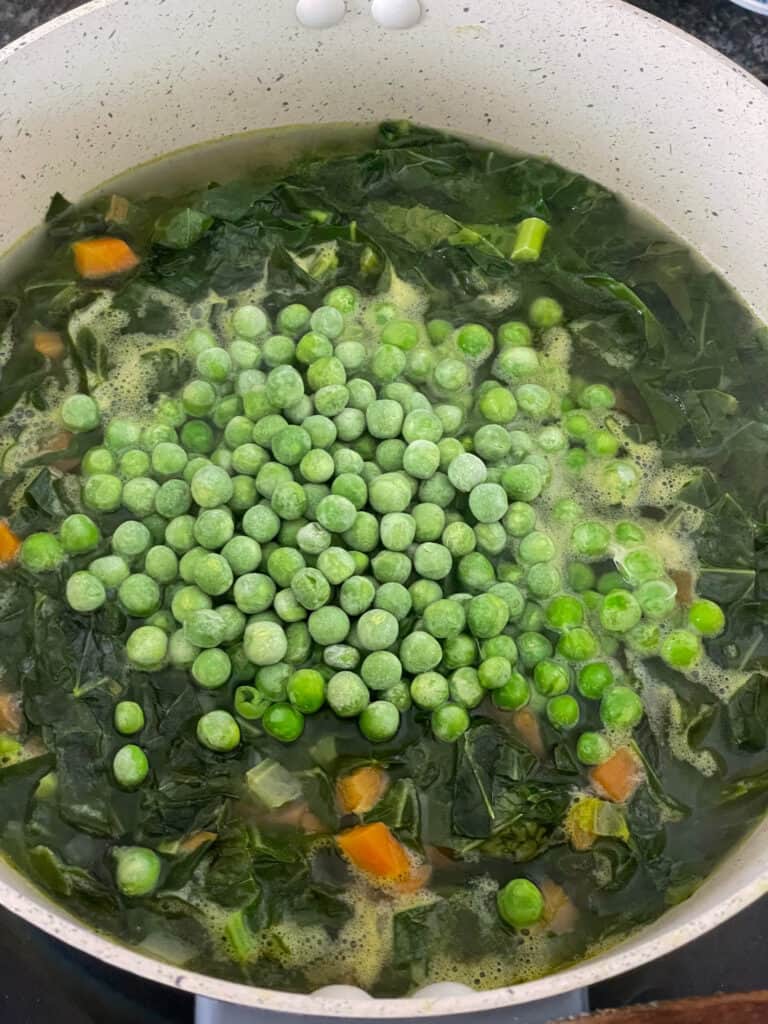
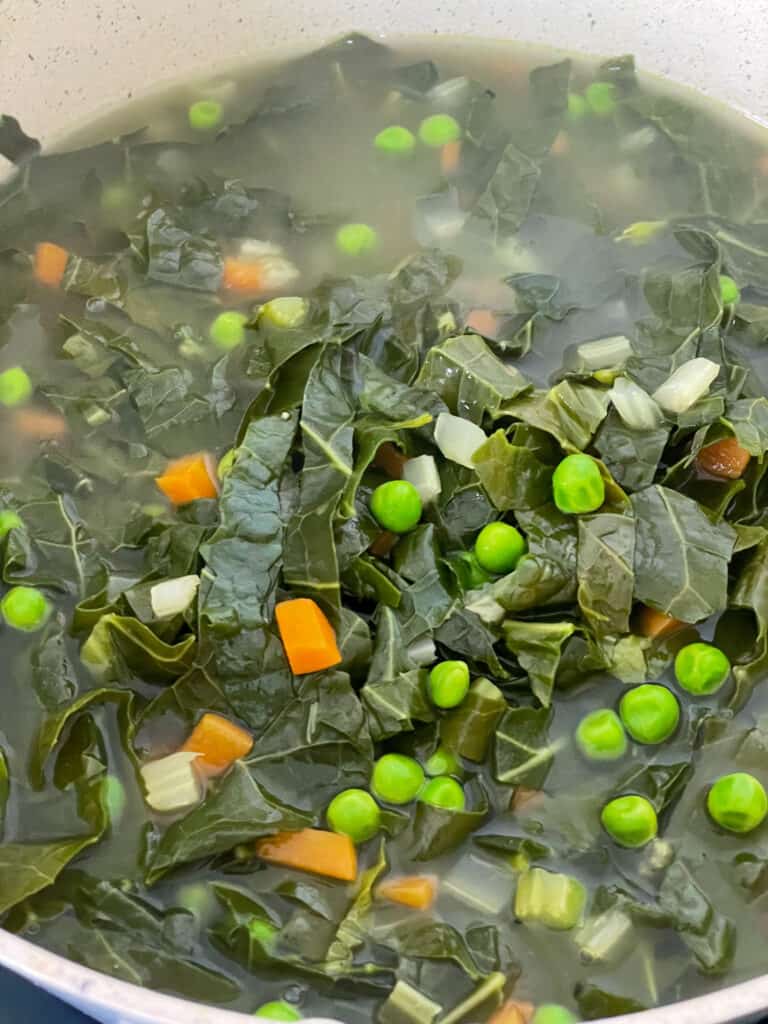
Step 8: Add the fresh or frozen peas along with a teaspoon of sugar and two tablespoons of apple cider vinegar.
Step 9: Bring back to a simmer and cook for 3 minutes or until the vegetables are cooked.
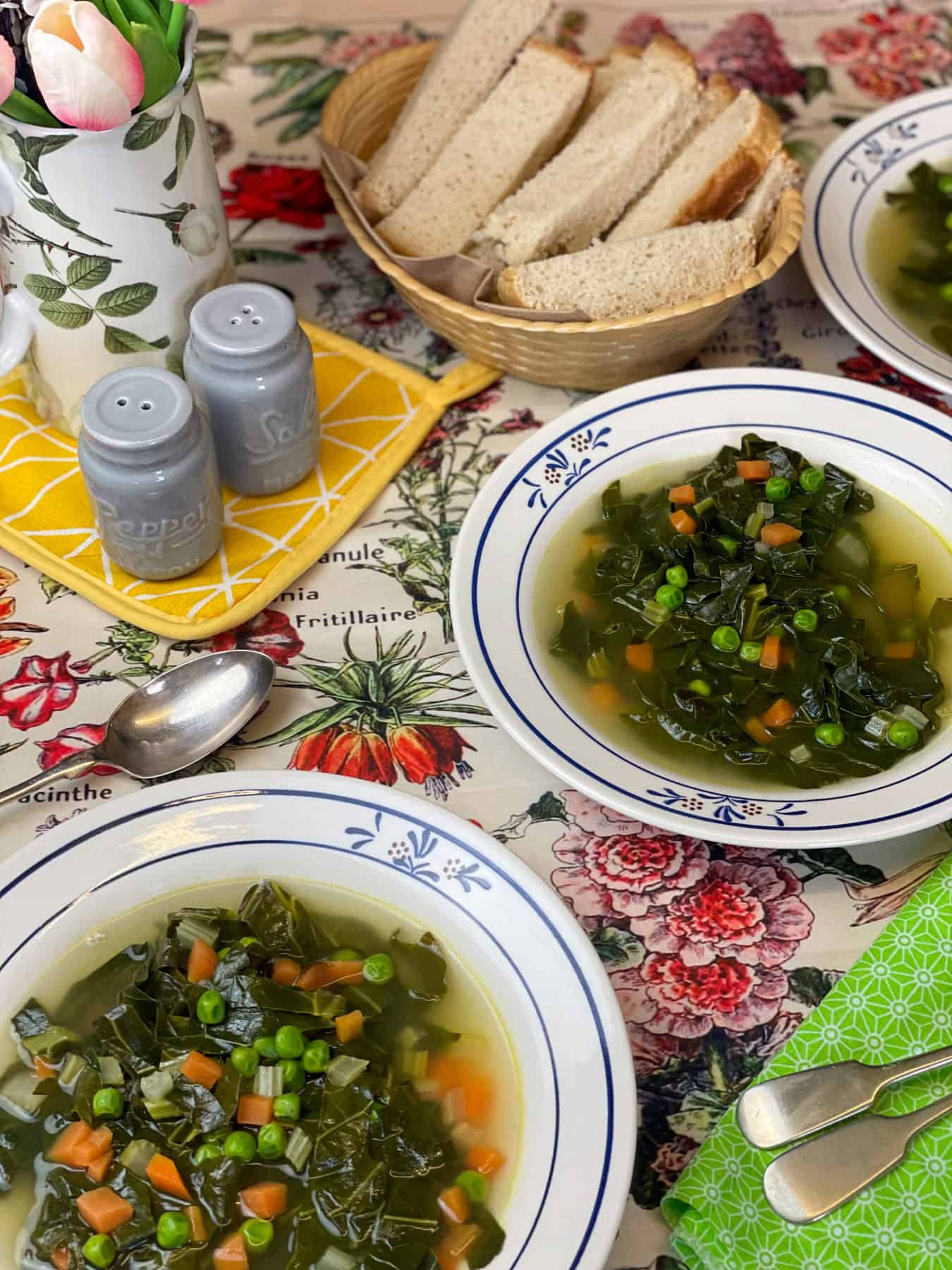
Serving suggestion: Serve with some bread slices to soak up the delicious vegetable juices. A sprinkle of nutritional yeast flakes is a tasty addition as is a pinch or two of cayenne pepper if you like spice.
Variations & optional add ins
The spring greens soup is complete on it's own but of course you can use it as a base to create your own soup and add more ingredients and flavours.
Protein Additions
- Cooked whole lentils, chickpeas, or beans for added protein and texture
- Tofu cubes, smoked tofu, seitan, or tempeh
- A sprinkle of toasted nuts or seeds over each serving
Additional Vegetables
- Zucchini [courgette] or summer squash, acorn squash, butternut squash
- Sweet corn kernels for sweetness and texture
- Bell peppers for colour and flavour
- Mushrooms for extra earthy flavours
- Onions & garlic
- Leeks
- Diced potatoes
Herbs and Spices
- Fresh basil, mint, chives, thyme, sage, rosemary, or coriander [cilantro] for added aroma and flavour
- Ground spices like cumin, coriander, chilli powder, cayenne pepper, paprika, or turmeric for added warmth and flavour
- Any of your favourite spice or herb blends
Flavour Boosters
- A dollop of pesto for added richness - add to the top of each served portion
- A spoonful of miso paste, well stirred through the soups broth for extra savouriness
- A splash of coconut milk or drizzle of cream for creaminess
- Soy sauce
Toppings
- Toasted nuts or seeds like pine nuts, flaked almonds, cashews, or sesame seeds, poppy seeds, sunflower or pumpkin seeds for crunch & extra protein
- A swirl of cream, yogurt, creme fraiche, or cream cheese for extra creaminess
- Grated cheese - we would use dairy-free cheese and dairy-free versions of the above options but of course you can go with your own dietary requirements
- Nutritional yeast flakes
Optional Seasonal Variations:
- For a winter variation, consider adding root vegetables like parsnips, swede [rutabaga], celeriac, or sweet potatoes.
- For an autumn/fall version, you might add diced pumpkin, butternut squash, or acorn squash
- For a summer version add some courgette [zucchini], vegetable marrow or lettuce - historically lettuce was often cooked in soup!
- For a spring version add some fresh broad beans or asparagus
Recipe notes
Storing
Leftover soup can be stored within the refrigerator for up to 3 days, or freeze for up to 2-3 months.
Reheating
Reheat by adding the soup to a non-stick pot. If necessary add extra vegetable stock.
Gently bring the soup to a boil and simmer for 1-2 minutes until piping hot.
FAQ'S
Yes, this soup can easily be prepared as gluten-free by using gluten-free vegetable stock. It's always best to check every ingredient for gluten, as it can lurk in many products you wouldn't expect to contain it!
Yes, as with any of our soup recipes they can be prepared as oil-free or added fat-free by replacing margarine, butter, or oil with vegetable stock or broth. Start with half a cup at first and then add a few tablespoons extra whenever it looks like the vegetables may stick as they sauté or cook.
However, the addition of a cooking fat does add extra flavour so if it is omitted then perhaps add extra flavours such as soy sauce, white miso paste, herbs, spices, or nutritional yeast flakes, just to add more depths of flavours that compliment the tasty vegetables in the soup.
Yes, you can use frozen green leafy vegetables either shop-bought or home prepared. Fresh spring greens can be easily prepped and frozen, which can be very convenient and make preparing your soup even quicker.
Yes, you can eat the stems of spring greens, although they are generally tougher and more fibrous than the leaves. If you choose to include them in your recipes, it's advisable to chop them into smaller pieces so they cook more quickly and evenly.
Here's an easy guide to preparing the stems:
1. To prepare the stems make sure to wash the spring greens and their stems well to remove any dirt or grit. If the stems are particularly thick, you can remove them from the leafy greens by folding the leaf in half along the stem and then slicing it away.
2. The stems can be tougher than the leaves, so chopping them into smaller pieces will help them cook more quickly - although for extra thick stems it may be best to discard as they may be too fibrous and chewy.
3. Perhaps consider sautéing, steaming, or boiling the stems for a few minutes before adding them to your recipe to make them more tender.
A few ways you can use up your spring green stems:
1. They can be included in our spring green soup. Just chop them finely and sauté along with the other vegetables to soften them up.
2. The stems can be a good addition to stir-fries. Their crunchy texture works well when fried quickly over a high heat.
3. For those who enjoy green smoothies, the stems can even be added to your smoothie! The stems provide extra fibre and nutrients, but make sure to blend them well to ensure a smooth texture, and don't add too many at once as the smoothie may have a more bitter taste, though adding some sweet apples will help.
4. If you like making home-made pesto you could add some of the stems to your recipe.
Any green leafy vegetable that you particularly enjoy, is in season, is readily available, is reduced at the supermarket or store, is on special offer, or perhaps you have a nice home-grown crop from your garden or allotment are all are perfect for a pot of home-made green soup.
A few ideas:
1. Spinach: These are tender leaves and quick-cooking so will need less time to cook, and the soup will be especially nice blended and enjoyed with a drizzle of cream and a few toasted nuts or seeds scattered over the top.
2. Kale: Use any variety.
3. Collard greens: A classic Southern green that is a bit tougher but very flavourful, but unless you grow it yourself in the UK it can be quite hard to find in the shops!
4. Swiss chard: Known for its bright, colourful stems and large, dark green leaves, and often used in Mediterranean cooking.
5. Beet greens: if you're lucky enough to find beet greens in the supermarket or store, or you have a crop of home-grown beetroot then do use them!
6. Mustard greens: These can add a spicy kick to your soup, and are best used along with another green vegetable as the spiciness may overpower the soup.
7. Turnip greens: Similar to mustard greens but a bit milder, these are often discarded but are very wholesome, so do use them up if you have access to these leaves.
8. Romaine or Cos lettuce: For a lighter summer soup, you can use these softer leaves which cook very quickly, or add these along with another green leaf. Surprisingly, adding lettuce to soups has been popular in Britain for centuries!
9. Bok Choy or Pak Choi: Adds a slight crunch and a unique flavour so are best to use along with another green leafy vegetable.
10. Arugula (Rocket): Peppery and can be a bit spicy, so this is best added toward the end of cooking, so it doesn't become too bitter. It's best added as an accompaniment to a different green leaf so that it flavours the soup rather than overpowering it.
11. Watercress: This is best added to the soup as a nice garnish or stir some through the soup near the end of cooking to add flavour and extra goodness rather than being the main green leafy vegetable.
12. Sorrel: Likewise add sorrel as an extra flavour in small amounts, as it brings a refreshing lemony tang to your soup. Don't cook this leaf for too long. Traditionally, foraging wild or wood sorrel leaves was once very popular in Britain.
13. Endive or Escarole: A bit bitter but can add extra flavours to the soup, and it's best to not use this as a complete replacement rather just add a small bunch.
14. Any cabbage variety: This can be used as a complete substitute for the spring greens as this green vegetable is flavourful and strong enough to be the main vegetable in a tasty soup.
15. Nettles: If you have access to a crop of young nettle leaves then by all means use these to create a deliciously nutritious soup. Nettle soup has been made by frugal Scottish home cooks for centuries! Just remember to use gloves while harvesting. Once the nettles are in a boiling liquid they will loose their sting. As nettles can be quite flavourful it may be best to cook these along with another green leafy veg like kale, spring greens, or cabbage.
16. Dandelion leaves: If you can access a crop of dandelion leaves [be mindful of pollutants, pesticides, roadsides, etc] you can wash these well and add a small amount to your soup for extra flavour and goodness.
A few important things to keep in mind when substituting the spring greens, is the different cooking times that a particular green vegetable will have and their textures. For example tender leaves like spinach or lettuce cook much more quickly than hearty greens like kale or collard greens.
Also some greens are spicier or more bitter than spring greens, so you may need to adjust other seasonings in your recipe accordingly. For greens that are bitter, spicer or more overpowering, then its always a good idea to use a mixture of green leafy vegetables.
If you prefer a smooth soup then blend the soup using an immersion stick blender, countertop blender or a food processor. Also, depending on your machine you may need to wait until the soup has cooled before blending.
Adding a few splashes of milk or cream to the soup while blending is a good way to add creaminess. Although, cooking diced potatoes in the soup or adding cooked white beans such as cannellini, and then blending will also result in a nice creamy thick soup.
A nice crusty bread pairs well with this soup such as our Irish Soda Bread which is 100% wholemeal and requires no oil or yeast. Or go for a wedge of delicious traditional Australian Damper Bread, which is a quick bread and also requires no yeast. Or bake a batch of our Quick Dinner Rolls which can be enjoyed warm from the oven or go for a warm Bran Muffins, Cornbread Muffins, or a nice traditional Buttermilk Scone.
The soup is also a nice starter soup as it's not too filling, and it's also great for a light meal along with a tasty sandwich or grilled cheese toasted sandwich.
Three Top Tips!
1. Choose the Freshest Greens:
It's important to use the freshest spring greens you can find. Look for leaves that are vibrant in colour and crisp to the touch. If you can't find spring greens, you can also use other tender green leafy vegetables like spinach, Swiss chard, Collards, or beet greens as substitutes.
2. Adjust Cooking Time for Vegetable Size:
The size to which you cut your vegetables will affect the cooking time. If you dice your carrots and celery finely, they will cook quicker and more evenly. Cutting the vegetables all the same size will ensure that all ingredients are cooked to perfection.
3. Season Gradually:
Start with a small amount of seasoning and adjust as you go. The vegetable stock and other ingredients will bring their own flavours, so it's good to taste the soup at various stages. This will allow you to adjust the seasoning according to your preference, ensuring that the spring greens, or your chosen green vegetable, remains the star of the soup bowl.
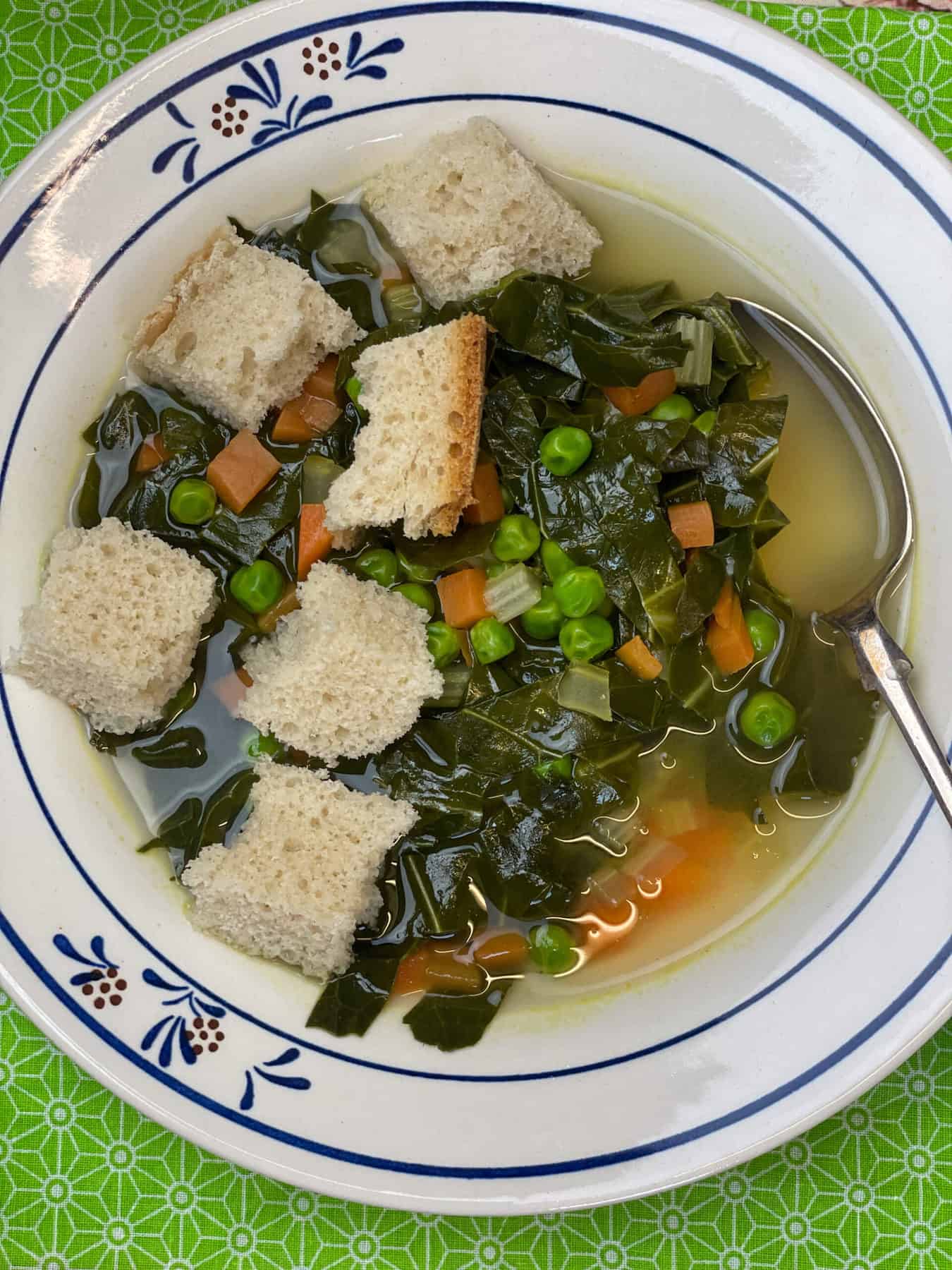
Have some leftover bread that you need to use up? Adding stale bread chunks or bread crumbs to home-cooked soups, broths and stews is a traditional practice that frugal cooks the world over have been doing for many centuries! You can also toast the bread cubes into croutons - find an easy method for home-made croutons over on our Old-Fashioned Cream of Swede Soup recipe.
More meat-free cabbage recipes
We love cabbages - red cabbages, green cabbages, white cabbages, any type of cabbage really. Stir-fried or steamed is our favourite way to enjoy cabbage and as we are Scottish we like to add a wee pat of vegan butter to the cooked cabbage, some salt and plenty of black pepper. It's so simple yet so good and we could literally just eat a big plate of it.
A few of our favourite family cabbage recipes include this easy Cabbage and Noodles dish which is inspired by the Polish Haluski, and uses a whole head of cabbage, and this rustic Italian Cabbage and Bean Soup is perfect for getting in a good doze of plant-based goodness, and for a fun and different meal try our Vegan Irish Corned 'beef' and Cabbage Stew which is prepared with tempeh but this can easily be switched out, and finally one of the best vegan comfort food meals is our Traditional Vegetable Stew and Dumplings.
You don't have to be vegan or plant-based to enjoy meat-free cabbage recipes as they are deliciously frugal meals so great for anyone on a budget who needs filling, wholesome meals.

***please note: for US measurements click the 'US customary button' within the recipe and the measurements will switch to tablespoons, cups, and ounces.***
📖 Recipe

British Spring Greens Soup
Equipment
- large soup pot with lid
Ingredients
To saute veggies:
- 1 tablespoon margarine or butter [or oil, or replace with ½ cup of vegetable stock - we used vegan butter]
Soup:
- 1 large carrot [about 120g diced small]
- 3 large celery sticks [about 120g diced small]
- 350 grams spring greens [shredded, weight is after the leaves have been prepped and any tough stalks removed]
- 130 grams peas [frozen or fresh]
- 1.5 litres vegetable stock
- 2 tablespoons apple cider vinegar [or white wine vinegar]
- 1 teaspoon sugar
Instructions
- Melt the margarine in the soup pot.1 tablespoon margarine or butter
- Add the carrot and celery, and cook over a low-medium heat, for 6 minutes with a lid half way across the pot. Stir frequently, and add a few tablespoons of water if it looks like the vegetables will stick to the pot.1 large carrot, 3 large celery sticks
- Next, add the spring greens and cook for a further 3-4 minutes. Stir the vegetables through the wilting greens a few times during cooking.350 grams spring greens
- Pour in the vegetable stock and season with a little salt and pepper. [If you begin with hot or boiling vegetable stock the cooking time can be reduced as it will take less time to bring the soup to a boil.]1.5 litres vegetable stock
- Bring to a gentle boil and cook for about 8 minutes, with the lid half way across the pot.
- Next, add the peas along with the sugar and apple cider vinegar.130 grams peas, 2 tablespoons apple cider vinegar, 1 teaspoon sugar
- Simmer for 3 minutes or until the spring greens and vegetables are cooked.Season to taste with salt and pepper. A sprinkle of nutritional yeast flakes over each bowl is a tasty but optional addition, as is some fresh chopped herbs such as parsley, dill, or chives.
- This soup can be blended until nice and smooth if preferred and doing so is a great way to encourage younger family members to eat their greens!
Notes
- Nutritional information is provided for guidance only and is not a strict calculation as ingredients vary.
- Store leftovers in the refrigerator for 3 days.
- Or freeze for 2-3 months.
- Reheat by adding the soup to a pot, add extra vegetable stock if necessary and bring to a gentle boil. Reheat for a few minutes until piping hot.
- This is a low calorie and low fat soup so is perfect for a light starter or light lunch, or even as a snack, along with a few slices of bread or a tasty sandwich or cheese toasted sandwich.
- The margarine or butter is optional but does add to the flavour and does not contribute many calories or fat. However if preferred sauté the carrot and celery using about ½ cup of vegetable stock, adding more when necessary.
- If no fat is used then perhaps mix a few teaspoons of white miso paste through the finished soup to add extra savoury flavour. Or stir through a tablespoon or two of nutritional yeast flakes.
- This soup can be blended until smooth if preferred.
- A few splashes of milk or cream added to the soup before blending is a tasty option as it results in a silky, creamy green soup.
- Alternatively, serve with a swirl of cream and a few toasted flaked almonds, or sunflower, sesame, or pumpkin seeds.
- Replace the spring greens with beet greens, collard greens, kale, or any variety of cabbage or green leafy vegetable.
- This is a simply seasoned soup so feel free to add in extra flavours such as cayenne pepper, chilli powder or flakes, paprika, dried mixed herbs or fresh herbs such as thyme, rosemary, sage, chives, or any spice or herb seasoning blend.
- Onions and garlic can be added to the carrot and celery if liked. Leeks are a nice addition.
- For gluten-free soup use a gluten-free vegetable stock.
- We are a plant-based family so we use vegan butter, dairy-free milk, plant-based cream [if adding as a garnish], etc., and those work very well.
Nutrition
Comments
Prepared our British Spring Greens Soup recipe? Or perhaps you switched out the spring greens and prepared Beet Greens Soup or Collard Greens Soup? We would love to know how you got on so do drop us a comment below and click the star ratings. All feedback is very much appreciated. Thanks so much! All the best, Jacq x



Leave a Reply