
This Vegan Cut and Come Again Cake is adapted from the old-fashioned family favourite fruit cake that is interestedly termed a cut-and-come-again-cake. As it was a budget-friendly staple cake its name 'cut and come again' referred to the fact that everyone would come back for a second slice or if there were many members of the family the cake would have seen much-cutting action! This vintage cake is perfect for storing in the cake tin and is so good paired with a hot cup of brewed tea.
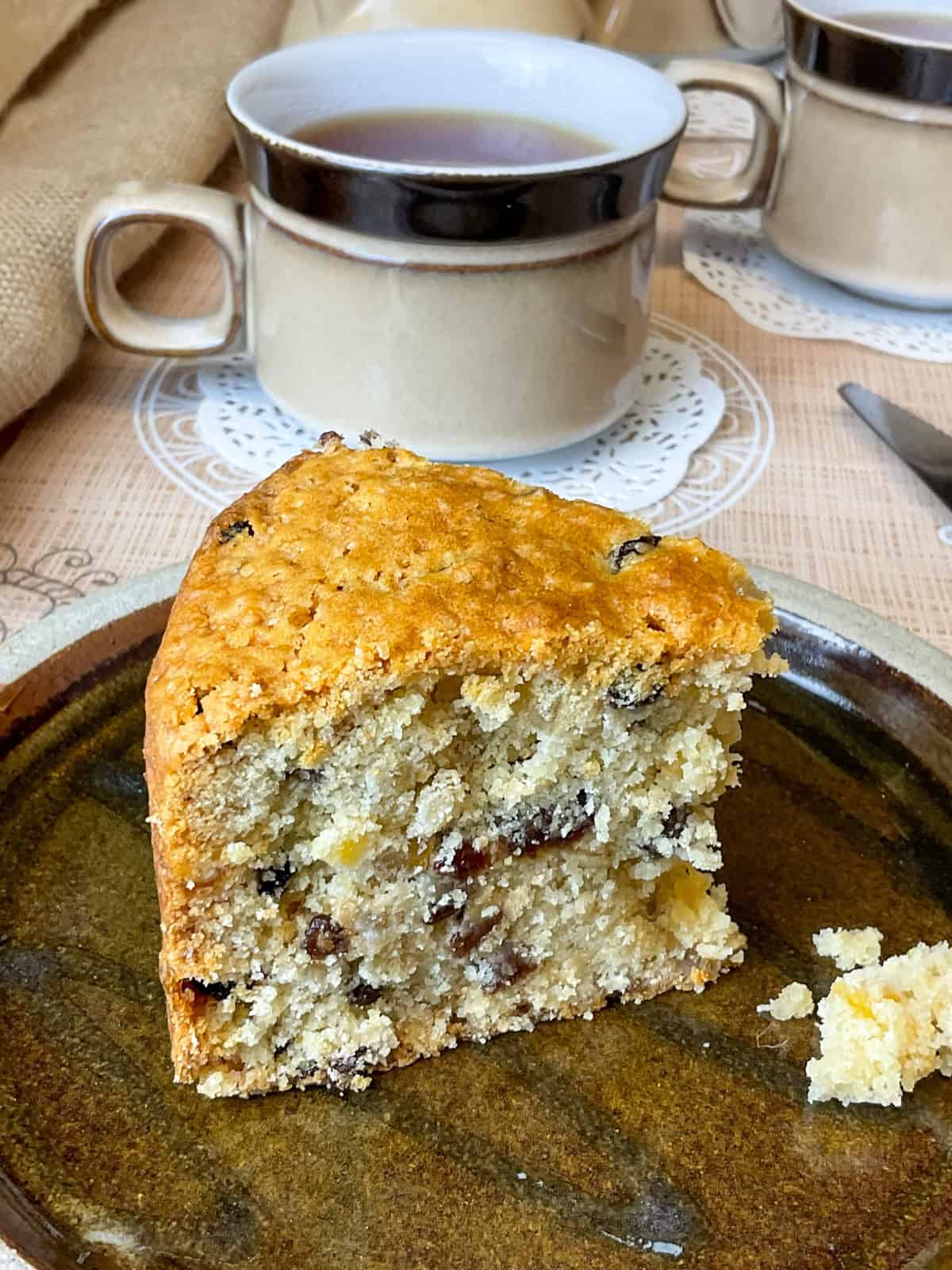
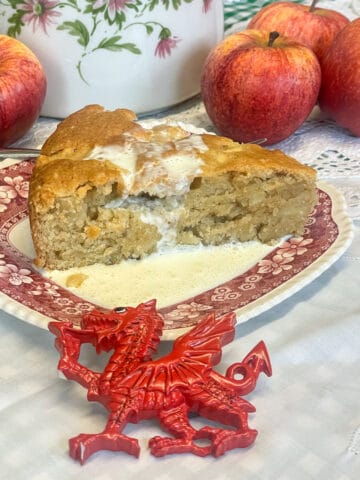
Our vegan version of a Cut and Come Again Cake is perfect for enjoying over the Easter weekend, as well as afternoon tea parties, picnics, pack lunches, or for enjoying with morning or afternoon tea or coffee break. We also love it for supper or dessert with some hot custard.
Jump to:
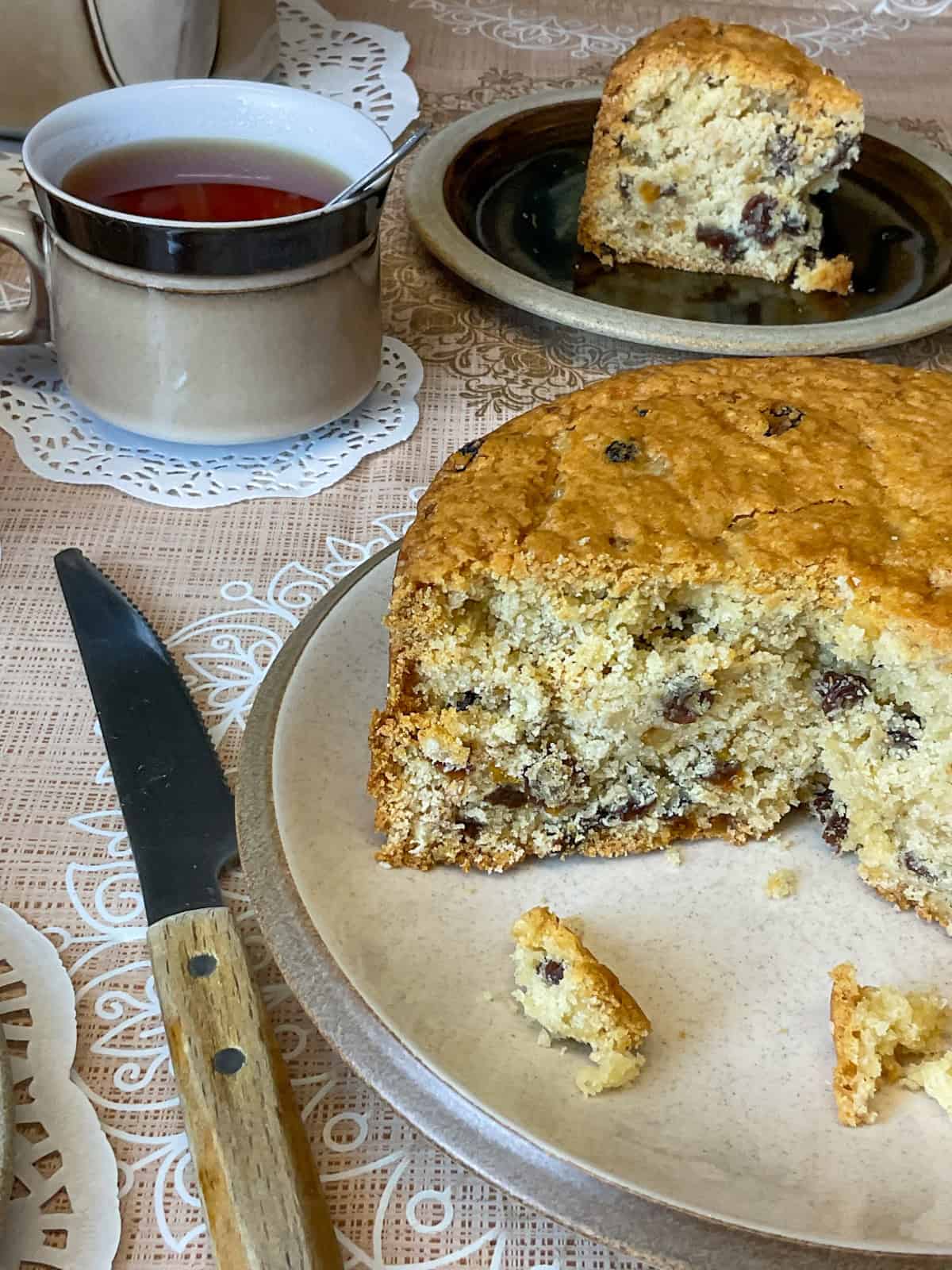
Why is it called a Cut-and-Come-Again Cake?
This type of plain fruit cake has been a firm favourite with British home-cooks for many generations. The name ''cut and come again'' means that it is the sort of cake you can have a slice today and then come back for another piece tomorrow and the next and so on!
The name actually originates from gardening where produce like ''cut and come again lettuce and salad greens'' are popular as the greens can be cut one day but will keep growing.
Plain fruit cakes were popular during the 1940s Second World War and 1950s post-war years as they were economical ways to fill hungry tummies. These types of cake were useful as they required less sugar or fat which were limited staples.
Victorian plain fruit cakes
This type of plain fruit cake is also similar to those popular during the Victorian era, with many examples found in Mrs Beeton's Book of Household Management (1861). The recipes often have wonderfully quaint names like Economical Cake, A Nice Plum Cake, A Nice Plain Cake, A Nice Useful Cake, and Common Cake: useful for sending to children at school.
Ingredients
This is a nice and easy cake perfect for sharing with family and friends. It does not require any fussy ingredients as we aim to make our recipes accessible to everyone as well as budget-friendly.
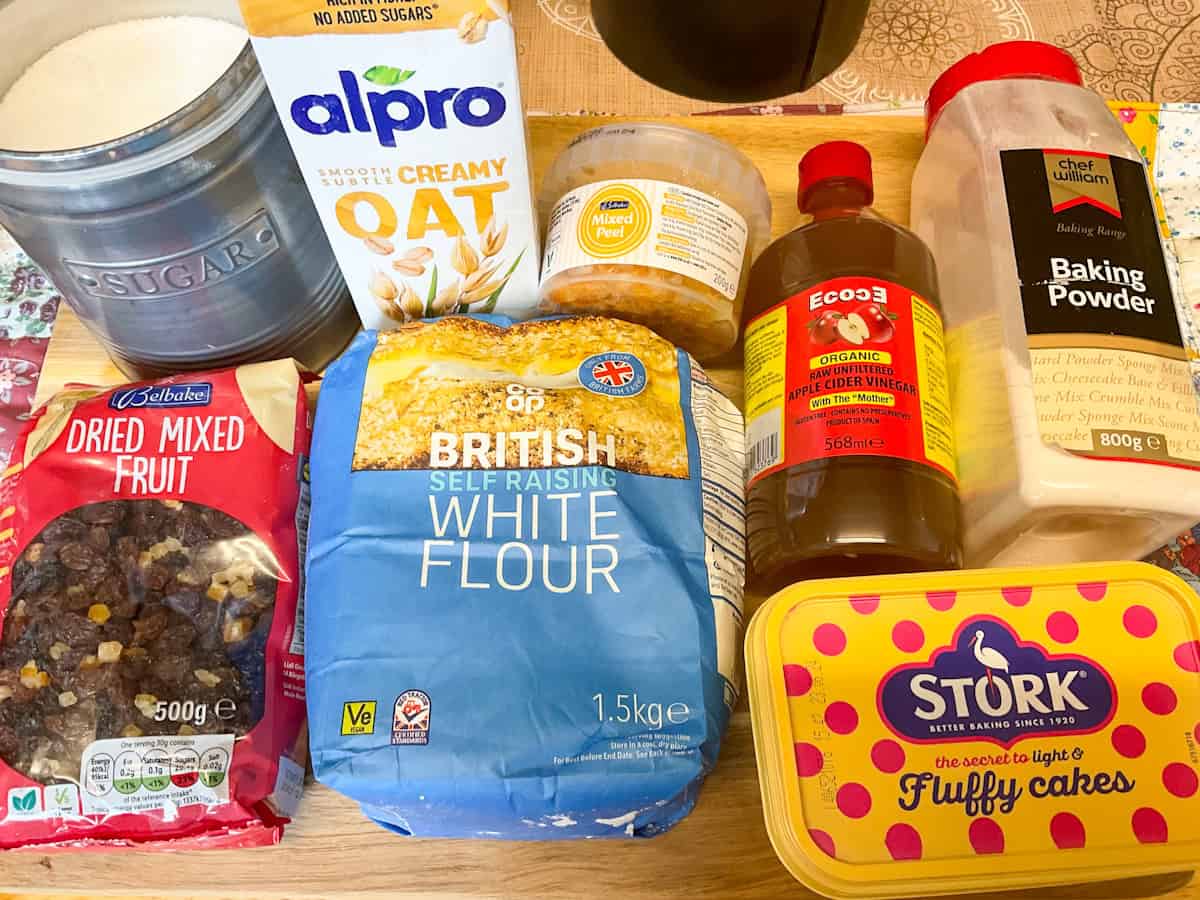
The ingredients you will need for this cake are:
- Self-raising flour
- Baking powder
- Margarine, suitable for baking (such as Stork baking spread)
- Granulated or caster sugar
- Dried mixed fruit (or a mix of dried currants, sultanas, and raisins)
- Mixed fruit peel (candied fruit peel, diced small)
- Dairy-free milk ( such as soya, almond or oat milk)
- Apple cider vinegar (or white vinegar)
- Golden syrup (this ingredient is not included in the image above but it is required for the cake)
How to prepare
This cake makes a wonderful staple cake to pop in the cake tin and enjoy throughout the week with many cups of tea!
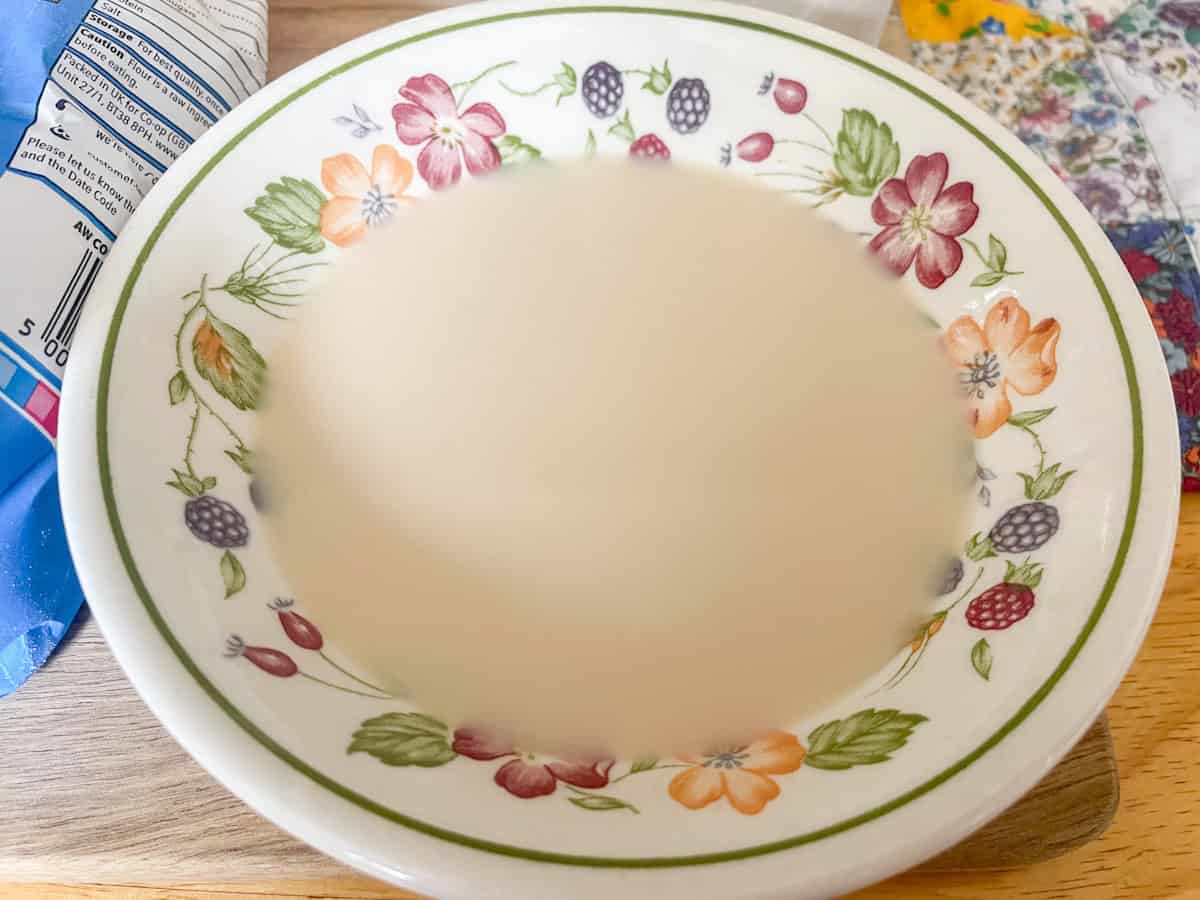
- First prepare the dairy-free sour milk by mixing the vinegar with the dairy-free milk. Set aside for at least 15 minutes before using in the recipe.
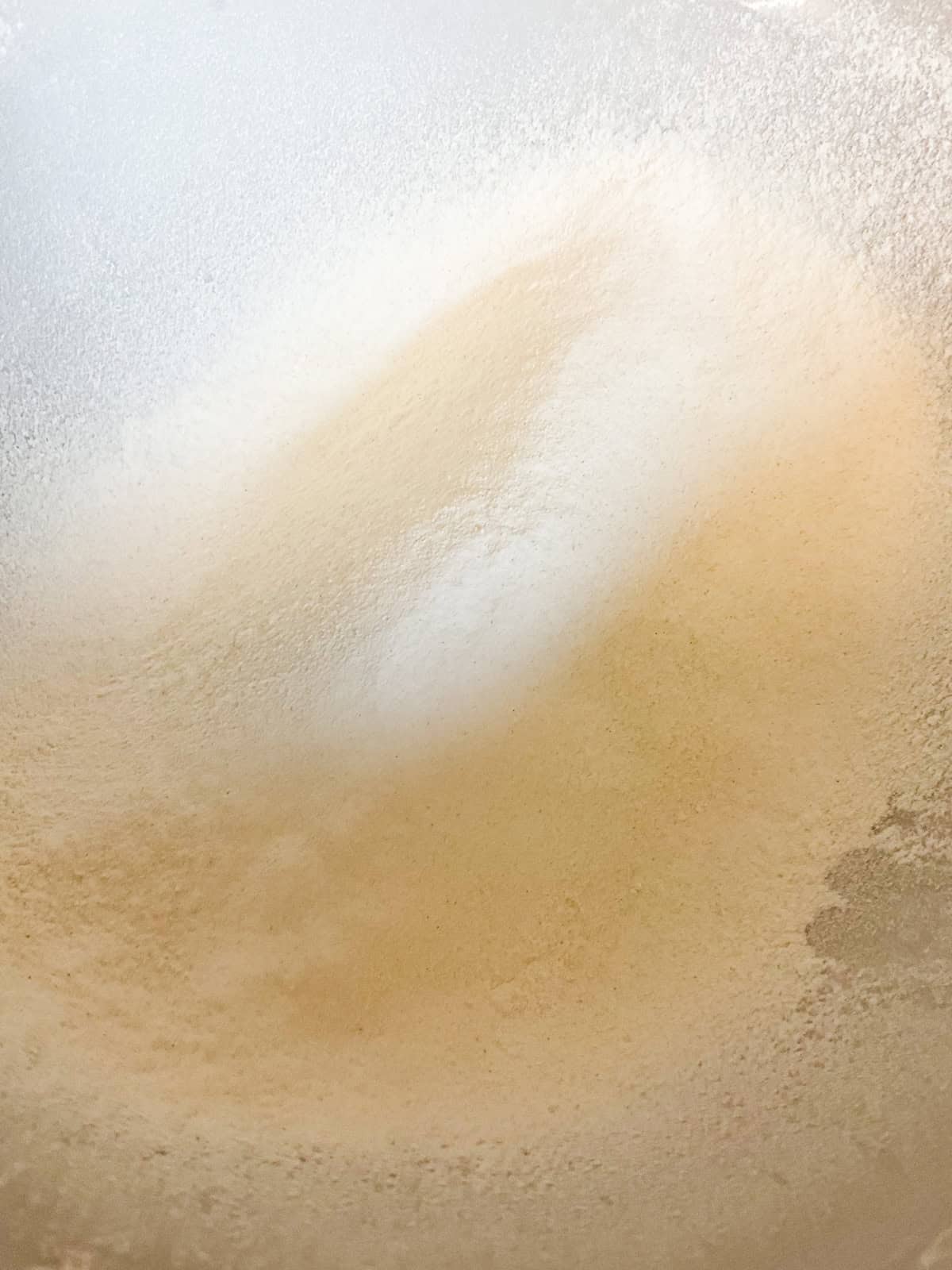
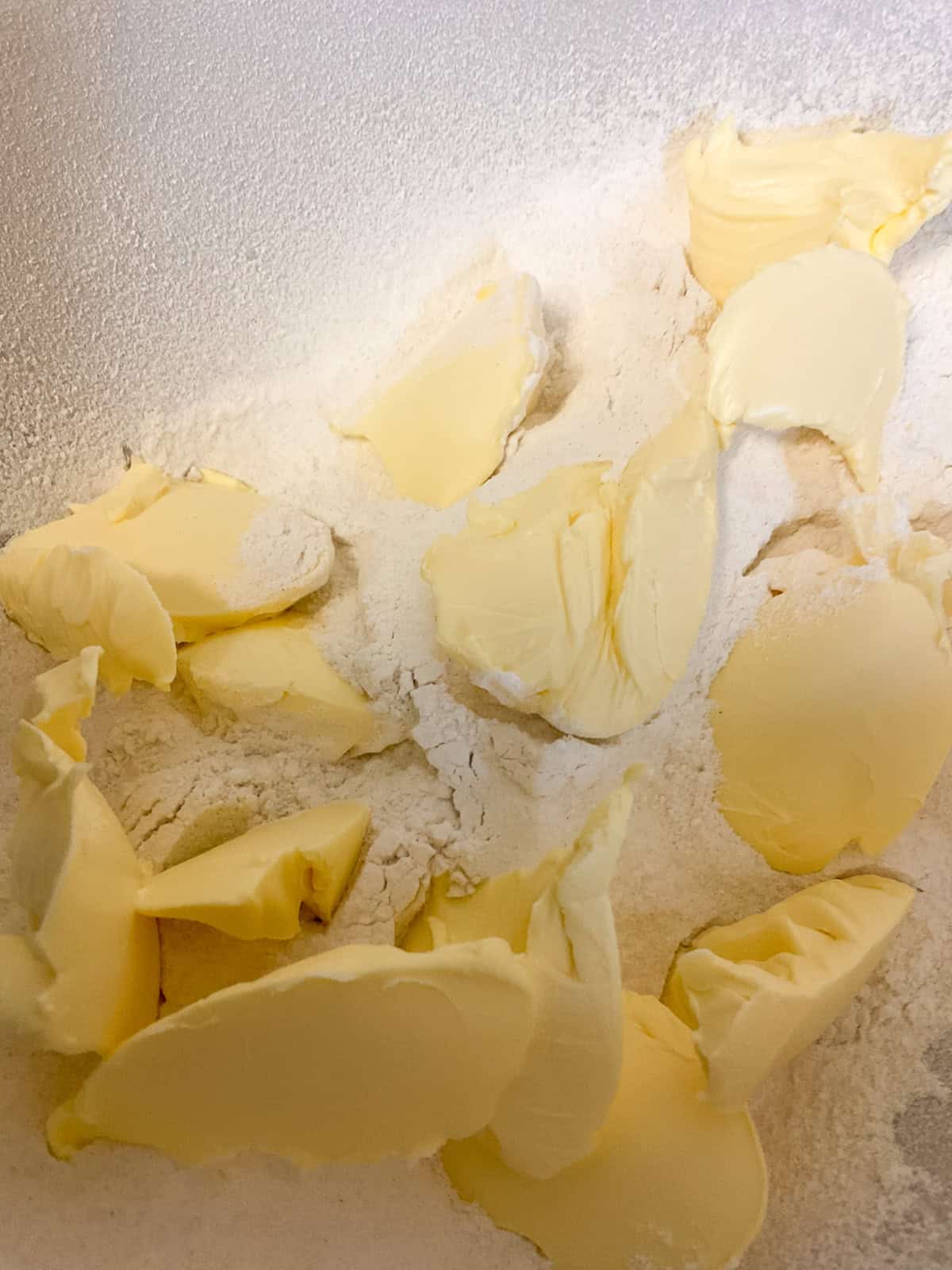
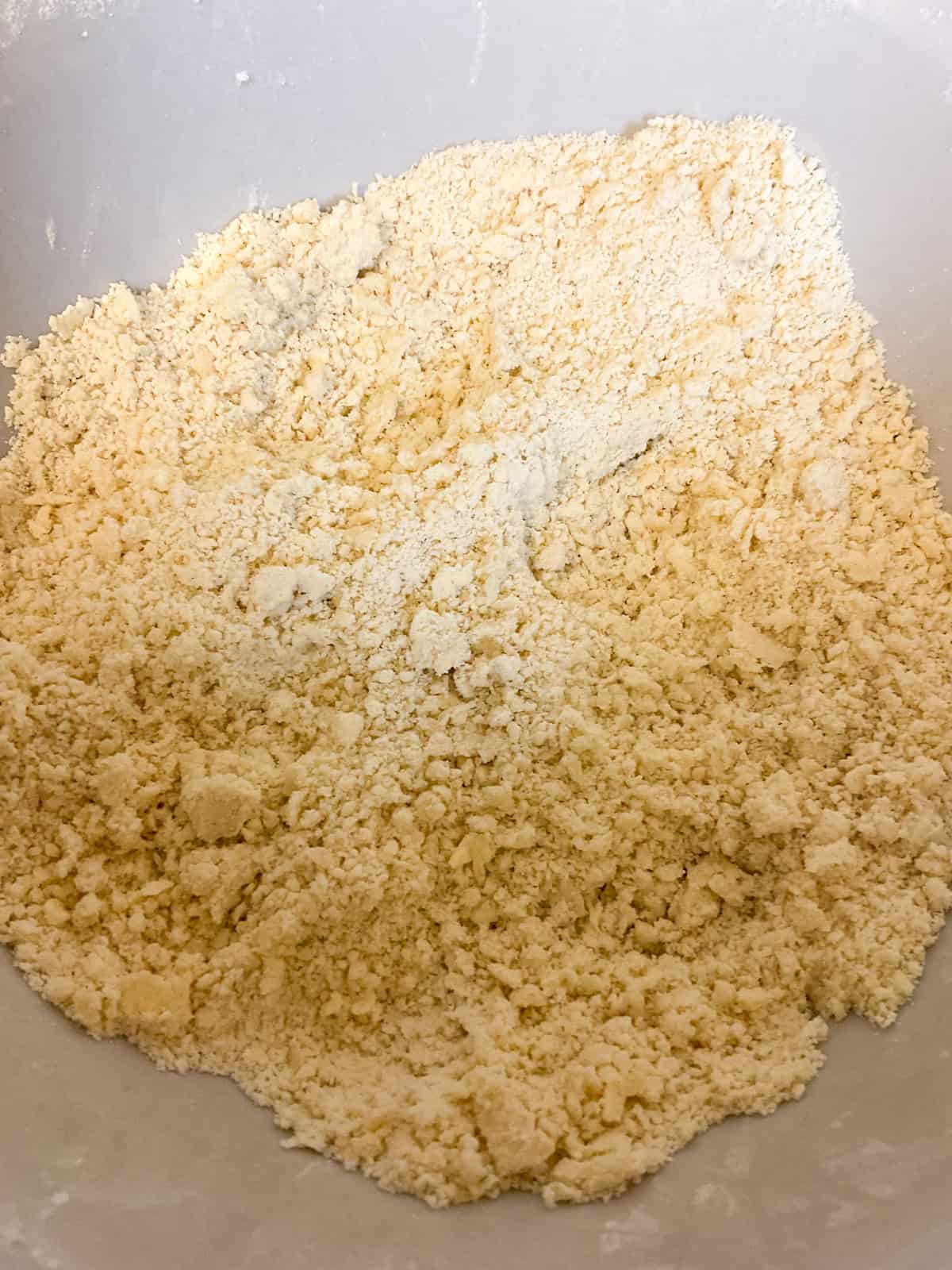
2. Sift the flour and baking powder into a mixing bowl.
3. Add the margarine, in blobs, to the flour mix.
4. Using your fingertips rub the margarine into the flour until it resembles breadcrumbs.
5. Stir through the granulated sugar.
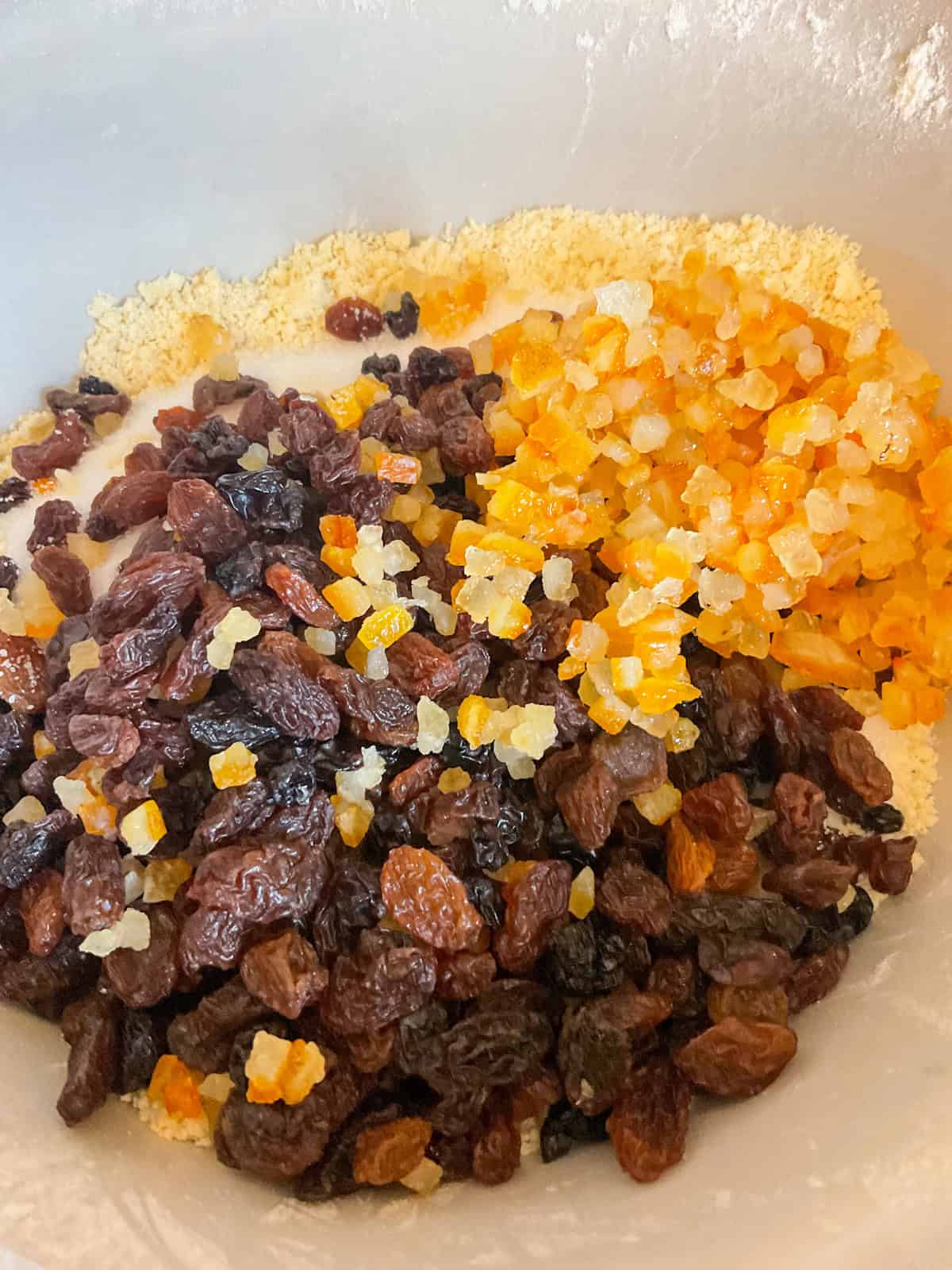
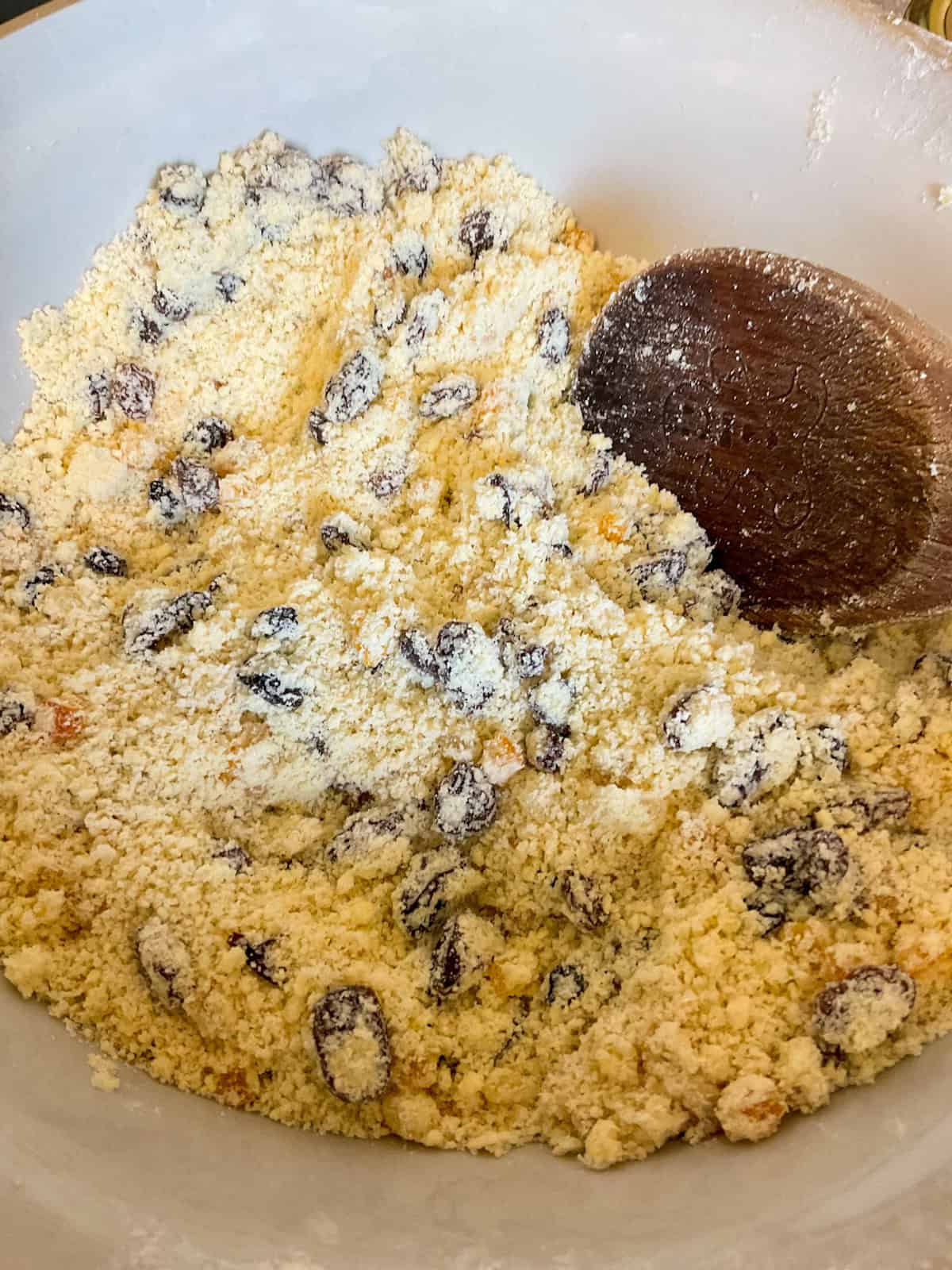
6. Stir through the dried fruit mix and mixed dried peel.
7. Add the golden syrup to the sour milk and stir well.
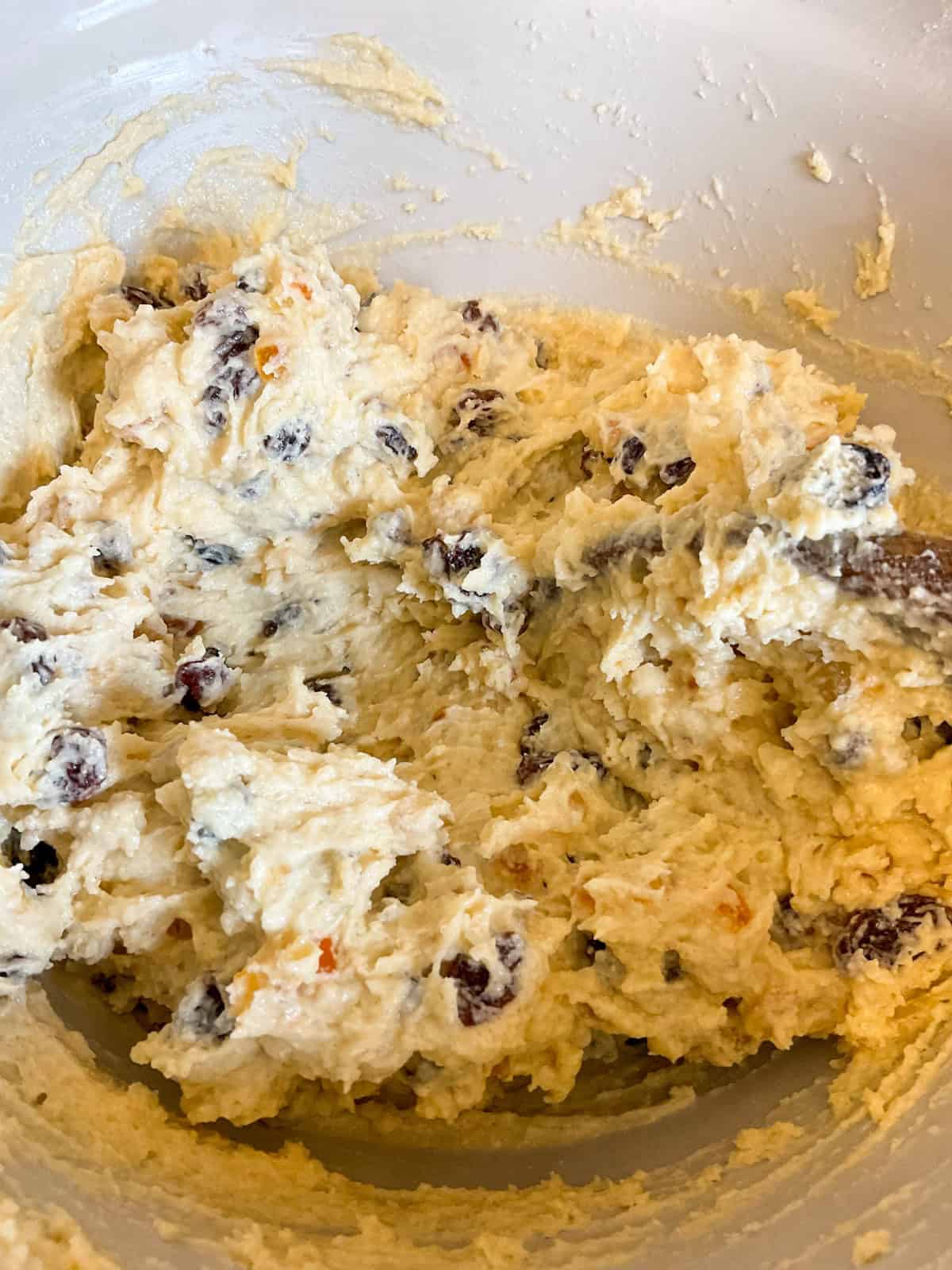
8. Pour the sour milk-syrup mixture into the cake mixture.
9. Mix everything together with a mixing spoon. It's best to do this by hand rather than an electric cake mixer as you don't want to overmix the cake batter.
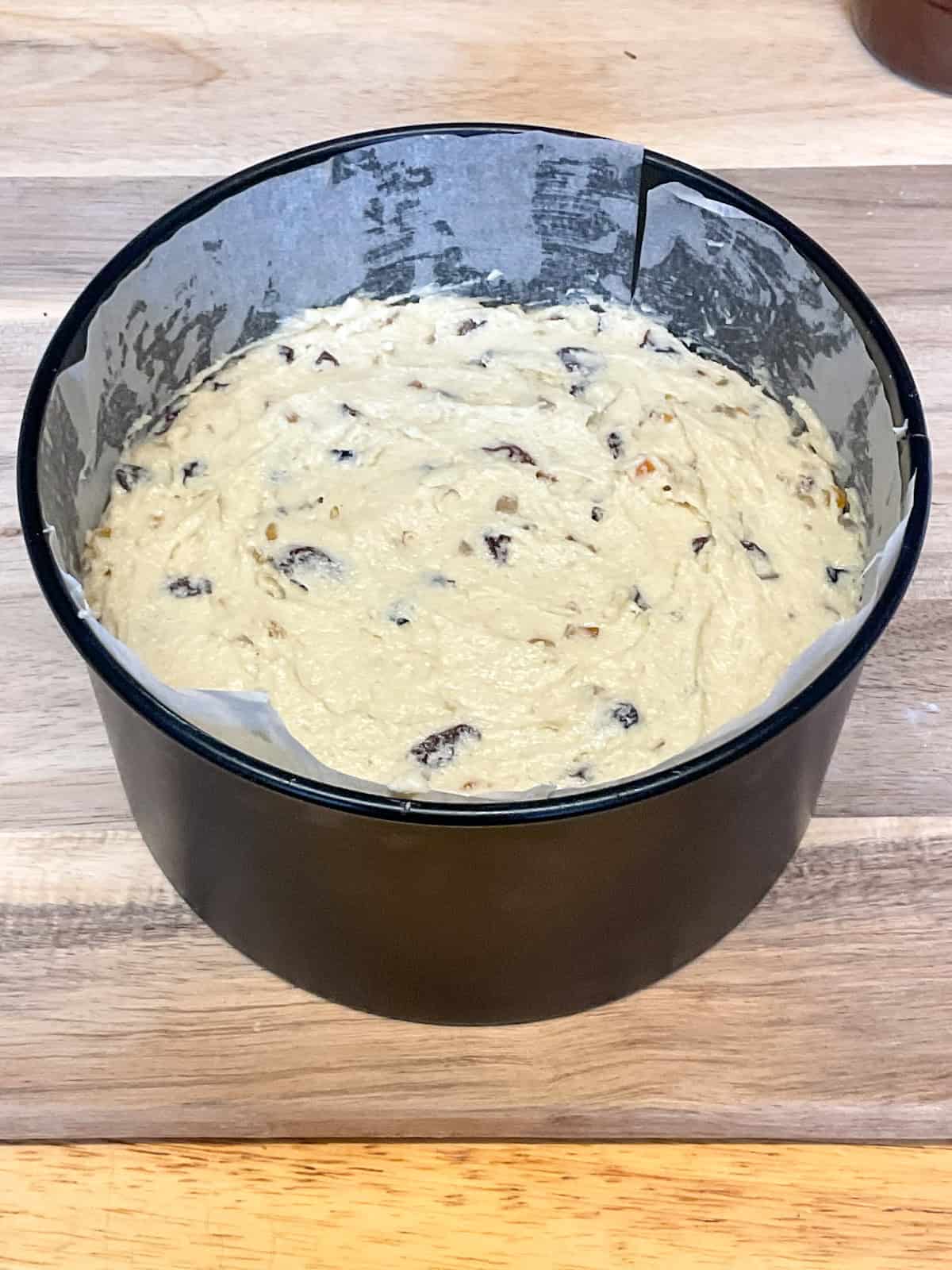
10. Scoop the mixture into a prepared cake pan and smooth the surface.
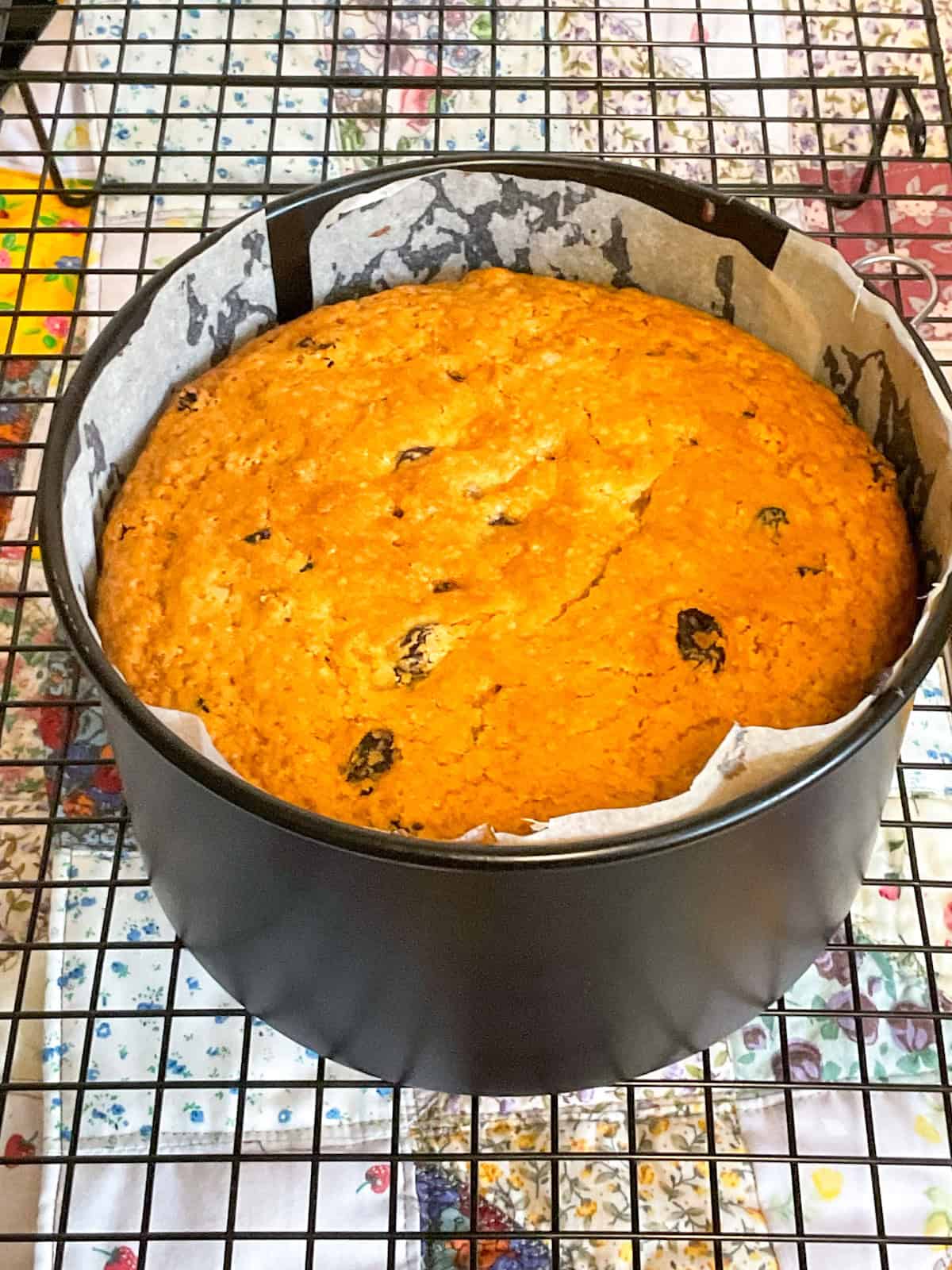
11. Bake for 1-1 ½ hours or until the cake is golden brown, with a firm surface, and a skewer popped through comes out clean.
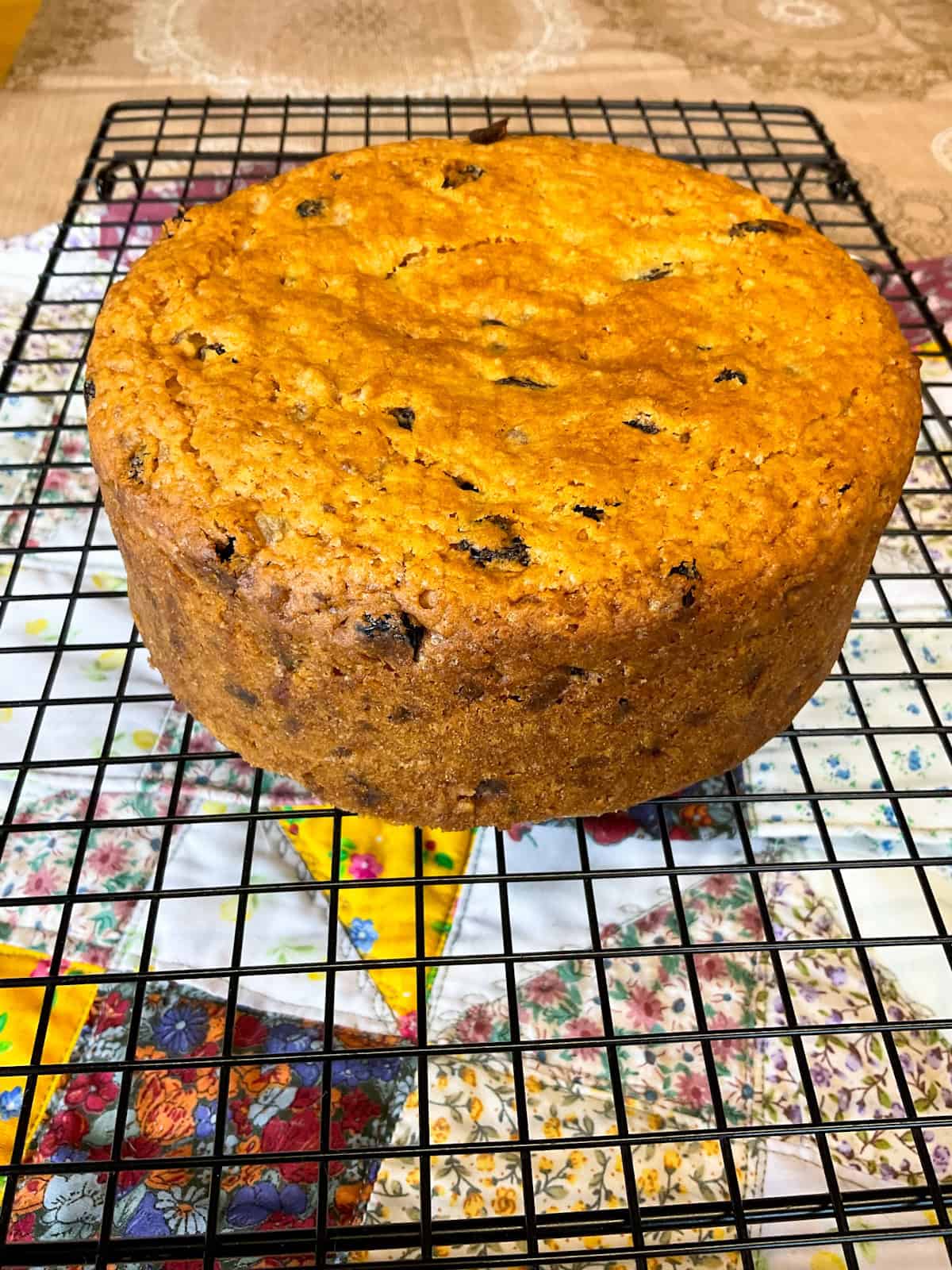
12. Allow the cake to cool in the cake pan for at least 20 minutes before carefully removing and placing on a cooling rack. Allow to cool before slicing.
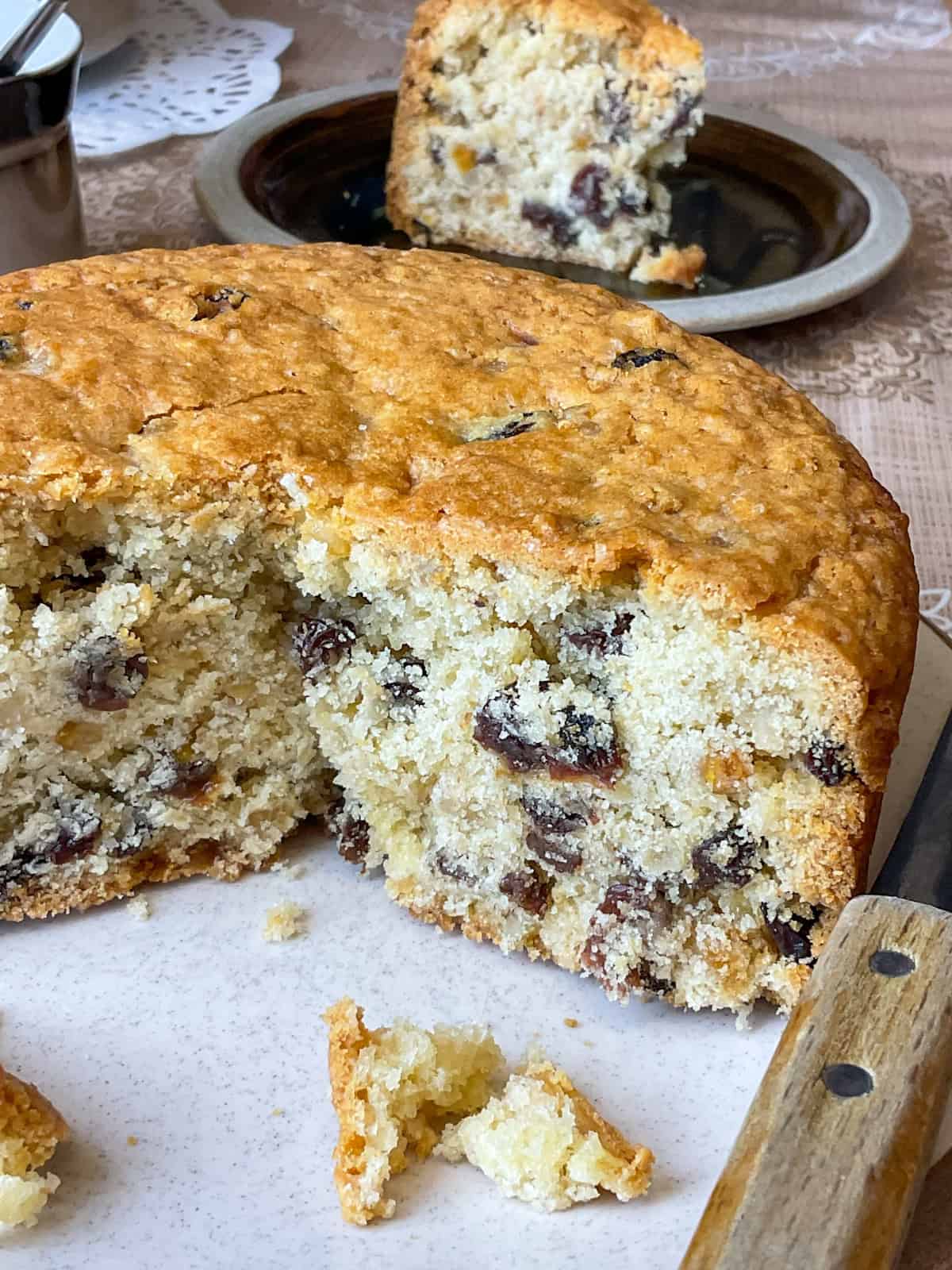
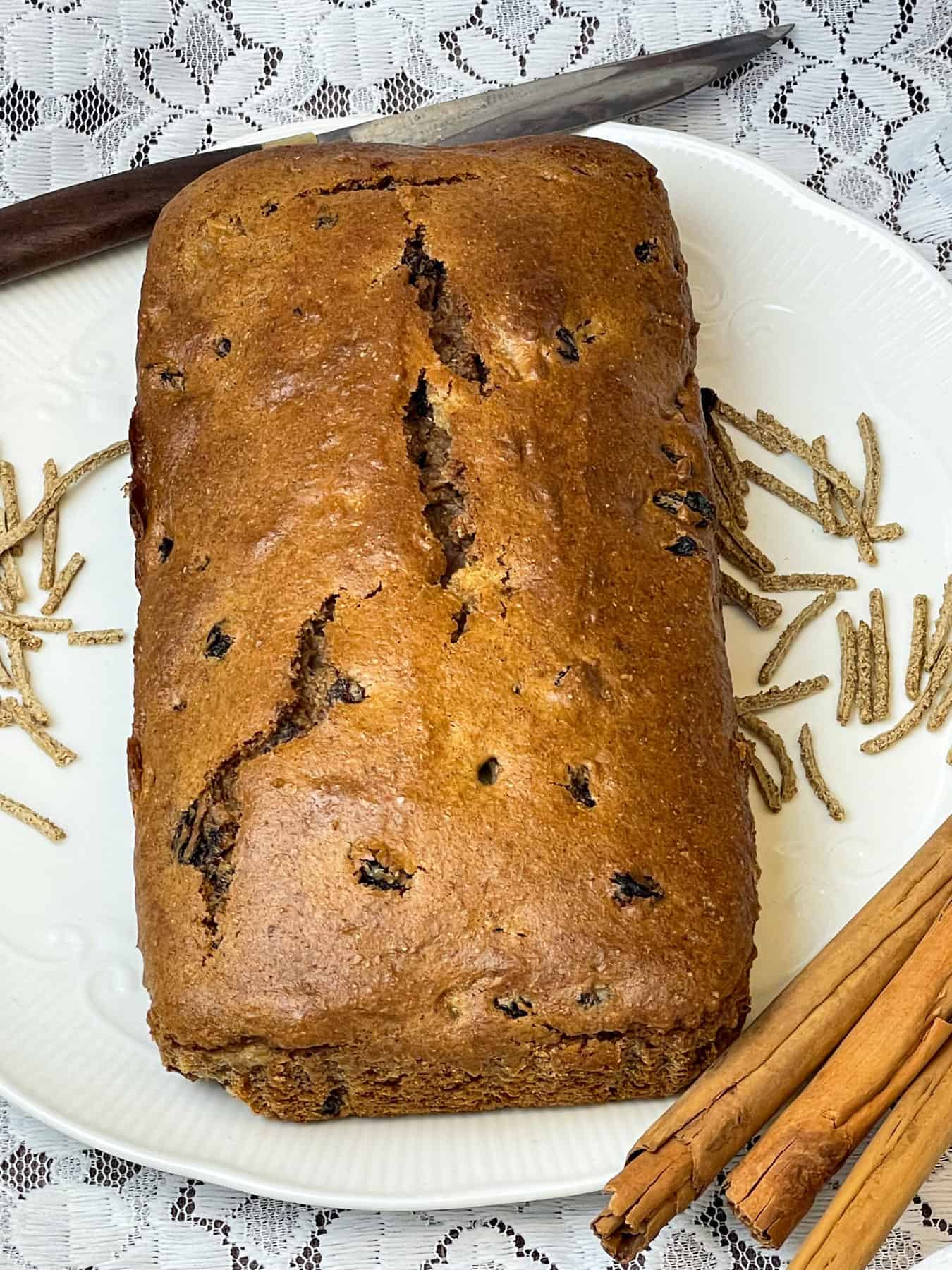
This fruit cake has a wonderfully crumbly but moist texture which resembles the texture of old-fashioned fruit cakes. The moresish crumbliness is all part of the nostalgia of old British cake recipes and adds to its homeliness.
More traditional fruit cake recipes
We love traditional homely fruit cakes especially ones prepared as dairy-free and egg-free as really you can't tell the difference, and often the vegan versions are much lighter. All our recipes are mostly prepared with just everyday ingredients that you might have already or are easy to source.
Our all-time family favourite fruit cake is this Vegan Fruit Loaf Cake which is also really popular with our regular visitors to our family recipe blog. For those times when you feel like reducing your refined sugar intake but still want a delicious fruit cake then this Gluten Free Fruit Cake is perfect as its sweetened naturally with dried fruit and orange juice. It's also gluten-free and does not need margarine or oil so is perfect for those leaner days! Or if you need recipes that are gluten-free of course.
A few more vintage family favourite bakes are this Old-Fashioned Weetabix Loaf Cake and this All-Bran Loaf Cake. Both these loaf cakes are easy to make and are prepared with breakfast cereals, and have stood the test of time as they are still so very popular.

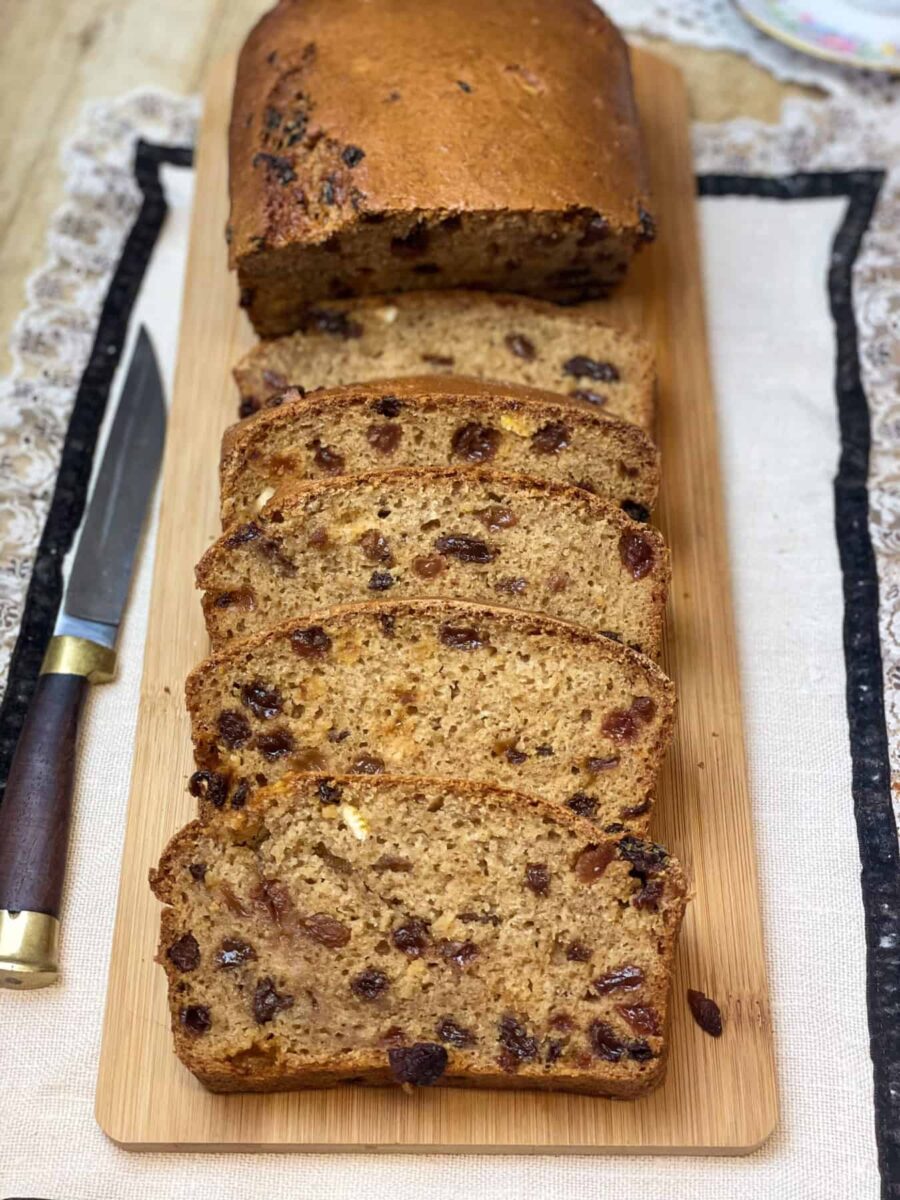
***please note: for US measurements click the 'US customary button' within the recipe and the measurements will switch to tablespoons, cups, and ounces.***
📖 Recipe

Vegan Cut and Come Again Cake
Equipment
- 6 inch cake tin (alternatively use a 7 inch cake tin)
- greaseproof/baking paper
- Measuring jug
- mixing spoon
- Mixing bowl
- sieve
Ingredients
Dairy-free sour milk:
- 170 millilitres plant-based milk [such as soya, oat or almond milk]
- 1 tablespoon apple cider vinegar [or white vinegar]
Rest of cake:
- 228 grams self-raising flour
- 1 teaspoon baking powder
- 115 grams granulated sugar [or caster sugar]
- 115 grams margarine [use one suitable for baking; we used Stork baking spread]
- 175 grams dried fruit mix [such as a ready made mix or a mixture of dried currants, sultanas, and raisins]
- 60 grams mixed fruit peel [otherwise known as candied citrus peel, if not pre-sliced dice the peel into small pieces]
- 2 tablespoons golden syrup [or a similar thick syrup]
Instructions
Prepare the plant-based sour milk:
- Stir the milk and vinegar together in a jug. Allow to sit for at least 15 minutes.170 millilitres plant-based milk, 1 tablespoon apple cider vinegar
Prepare the cake:
- Preheat the oven to 180°C (160°C fan) / 350°F / Gas Mark 4.
- Prepare the cake tin by greasing with margarine and lining with baking paper.
- Sift the flour and baking powder into a mixing bowl.228 grams self-raising flour, 1 teaspoon baking powder
- Add the margarine in little blobs to the bowl.115 grams margarine
- Using your finger tips rub in the margarine into the flour until it resembles breadcrumbs.
- Next, stir through the sugar, dried fruit mix and mixed fruit peel.115 grams granulated sugar, 175 grams dried fruit mix, 60 grams mixed fruit peel
- Stir the golden syrup through the sour milk you prepared earlier.2 tablespoons golden syrup
- Pour the milk mixture into the dry ingredients, and stir with a mixing spoon until just combined.
- Scoop the mixture into the prepared cake tin and level out the surface.
Bake:
- Bake on the middle shelf of the oven for 1 to 1½ hours. The cake is ready when it feels firm to the touch, is golden on top, and the sides have started to pull away from the tin. A skewer inserted into the centre should come out clean.If you're using a fan oven, keep in mind that it may bake more quickly. Our fan oven baked the cake in 60 minutes, while our electric oven took closer to 1½ hours, so it's worth checking from around the 55-minute mark to see how it’s coming along.Please note: The top of the cake may feel a little firm once baked, but don’t worry as this softens up by the next day. Once the cake has completely cooled, wrap it in kitchen foil and leave it to rest overnight. I always find fruit cakes taste even better the next day once the flavours have settled.
Cool:
- Cool the cake in the loaf pan for 20 minutes before carefully removing from the pan and setting on a cooling rack to cool completely.
Serving suggestion:
- Enjoy a slice of cake with hot custard for a tasty vintage pudding or dessert. This is an especially nice way to enjoy older slices of fruit cake.
Notes
- Baking Time: Oven temperatures can vary quite a bit. Fan ovens tend to bake faster, so start checking your cake from around 55 minutes. The cake is done when it feels firm, the top is golden, and a skewer inserted in the centre comes out clean.
- Firm Top? Don't worry if the top feels a little hard once baked as this softens nicely overnight. Once completely cool, wrap the cake in kitchen foil and leave it to rest. It will taste even better the next day.
- Golden Syrup: Golden syrup is quite thick so this can be replaced with another thick syrup if you prefer. However, don't use a syrup that is quite thin or runny.
- Fruit Mix: You can use any combination of dried fruits you have to hand such as dried currants, sultanas, raisins, cranberries, chopped dates or apricots all work well. Raisins and currants are traditional choices. Just make sure the total amount comes to around 175g.
- Mixed Fruit Peel: This is usually a blend of finely chopped candied orange and lemon peel. It adds a nice citrusy flavour to cakes. You can find tubs or packets of mixed peel in most supermarkets at their bakery aisle.
- Milk & Vinegar: Mixing plant-based milk with vinegar creates a quick vegan ''sour milk'' or "buttermilk," which helps give the cake a lighter texture. Soya, almond, or oat milk work well, but you can use what you have.
- Storage: This cake keeps well for a week, wrapped in kitchen foil, and stored in an airtight container at a cool room temperature. It's ideal for slicing as needed, just like the old-fashioned "cut and come again" cakes were meant to be.
- Refreshing: The cake may keep a little longer if stored in a cool, dry place and well wrapped. If a few slices go a bit stale, they can be easily refreshed by just popping them in a warm oven for a few minutes. They're especially delicious served warm with hot custard.
- Cake Tin Size: This recipe is written for a 6-inch (15cm) loaf or round cake tin, which may seem small by today's standards, but was quite common for family bakes in vintage times. Despite the tin size, the finished cake is substantial as it weighs around 830 grams once baked, so it's still a generous cake. If you only have a 7-inch tin, that will also work, though the cake will be a little shallower and may bake slightly quicker so just keep an eye on it. I found my 6-inch tin in a local hardware shop (not one of the big chain stores) for just a few pounds, so it's well worth checking smaller independent shops or budget homeware stores if you're keen to try more traditional bakes. Using the right size tin helps give the cake that lovely height and classic old-fashioned feel.
Nutrition
Comments
We would love to hear your thoughts about this recipe especially if you give it a go. Do leave us a comment below. Thanks so much. Jacq x
Jacq says
We love this vegan Cut and Come Again Cake but we really want to know what you think of the recipe. Do drop us a comment below it's very much appreciated. Thank-you! Jacq x