
Duke Pudding is a type of old-fashioned bread pudding that was a popular recipe in the 1940s-1950s British wartime and post-war kitchen, when rationing and shortages were part of everyday life. It's a 'make do' recipe as it uses up odds and ends such as stale bread, carrot, the dregs of the milk carton and a few tablespoons of dried fruit. Duke pudding is an easy old-fashioned bread pudding recipe that results in a comforting, homely dessert.
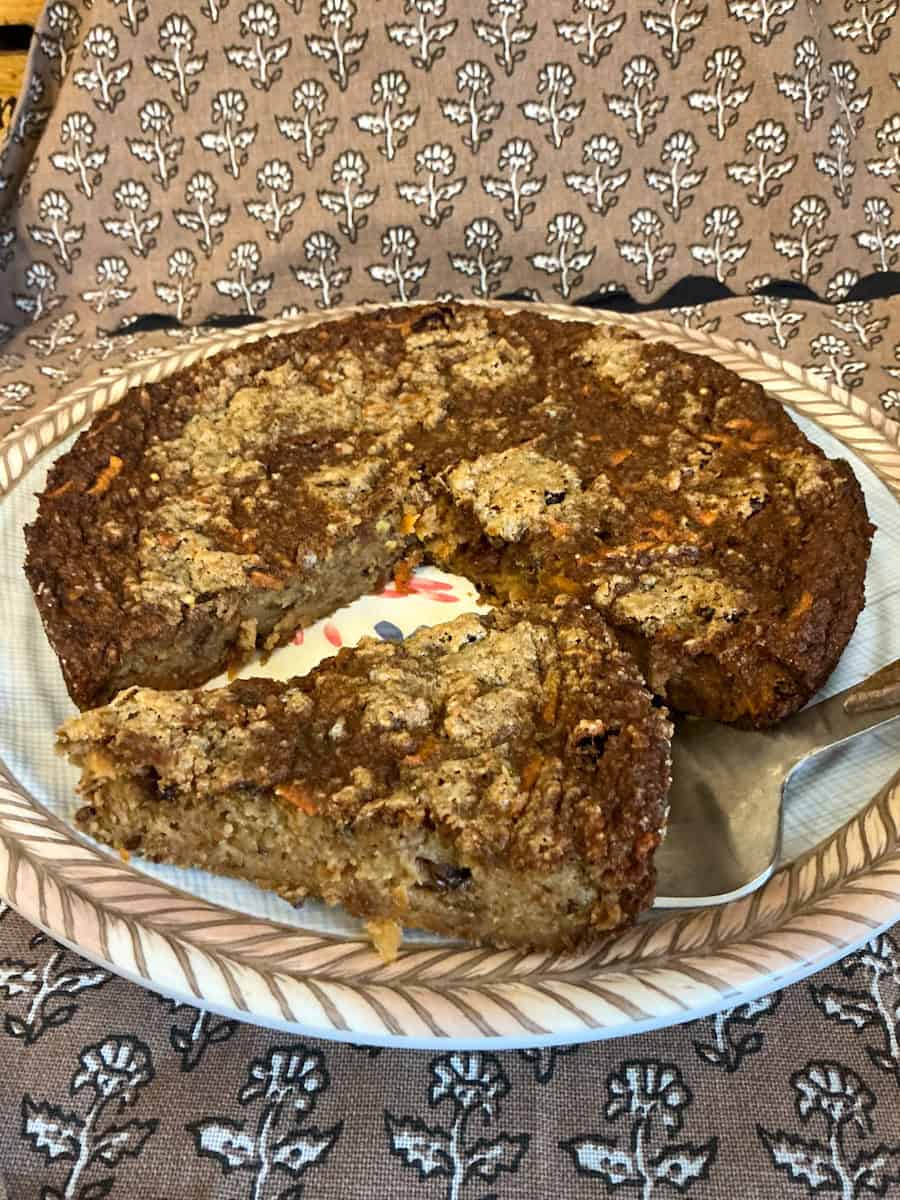
This is a vintage leftover pudding as it uses up:
- a few slices of stale bread
- a little grated carrot - or replace with apple
- small amount of sugar and spice
- milk bottle 'rinsings' - which is simply an empty milk bottle or carton with some water shaken inside! Very frugal as it makes use of every last drop of your milk. I use plant-based milk (soya milk) for this recipe but any milk you prefer is fine.
Puddings and desserts prepared with leftover ingredients were very popular during the 1940s and 1950s as every last drop and crumb was valuable. Preventing food waste was vital to survival. Today, our food costs keep rising due to the cost of living crisis so frugal recipes like this one are so very important.
This recipe is part of my 'Cooking for Victory' series, where I will be sharing traditional British wartime recipes, from the 1940s - 1950s, but slightly adapted for today's needs. These recipes aim to create staple recipes that are budget-friendly, adaptable, and easy, as the cost of living continues to rise.
Jump to:
Origins of Duke Pudding
The best old-fashioned puddings made good use of a few simple everyday ingredients to create a satisfying after-dinner dessert.
I found this Duke Pudding recipe within my copy of the Victory Cookbook, by Marguerite Patten OBE, which is a collection of British frugal recipes sourced from 1940s-1950s ordinary kitchens and recipes published by The Ministry of Food.
The recipes helped households stretch their rations and limit food waste, while maintaining wholesome home cooking.
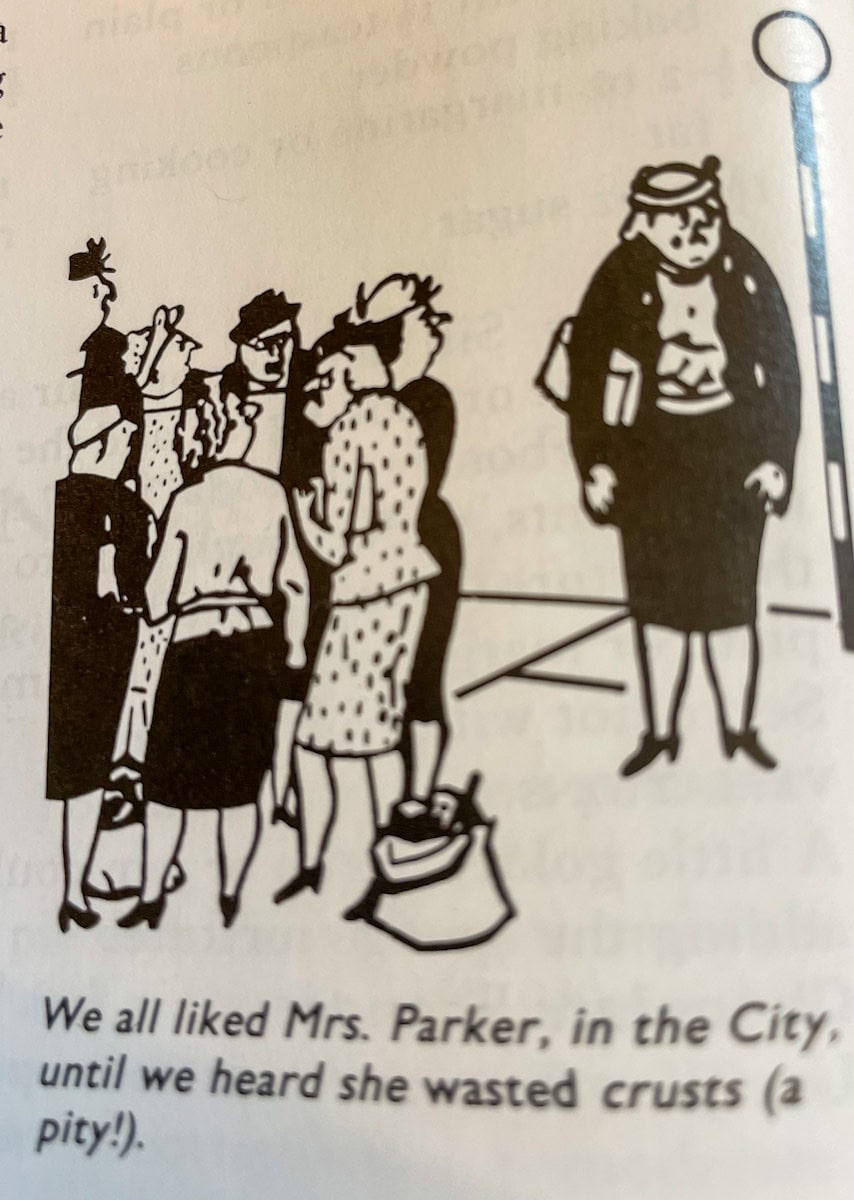
Image source: Victory Cookbook: Nostalgic Food and Facts From 1940 - 1954, by Marguerite Patten OBE (2002) Chancellor Press
Duke Pudding, a type of bread pudding, is made from a few ingredients that in modern times would likely just be thrown away such as a few slices of stale bread and a chunk of carrot. The recipe even recommends swirling out an empty milk bottle with water to create the liquid required.
The origins of bread pudding date back to medieval kitchens where what we know today as gingerbread, was first prepared by mixing breadcrumbs with honey and spices.
In Victorian times bread puddings were common with both rich and poorer kitchens with richer cooks adding in more indulgent ingredients such as suet, eggs, honey, and dried fruit. More frugal homecooks would have prepared a more plainer bread pudding.
Today, bread pudding is still much loved by many as it is a great budget-friendly way to use up stale bread or yellow-sticker reduced bread. In our recipes we can adapt bread puddings to our own tastes and preferences as depending on our resources we can use different types of bread, sugar, and dried fruits. Additionally, we can choose to add more sugar for a sweeter pudding or switch out the warm spices to what we like best.
Why this recipe is a useful staple 🥣
- It uses up stale bread - you can use any type of bread you like including gluten-free
- Simple, everyday ingredients that are easy to switch out - eg use any dried fruit you like, any type of sugar, any type of milk, replace carrot with apple
- Budget-friendly & frugal
- Lightly spiced - but you can replace this with vanilla, almond, or lemon extract
- It's a fun historical recipe that can connect us with our ancestors
- Enjoy warm with custard or cold with fruit jam or cream
Ingredients & Method
I used Co-op Farmhouse seeded bread for this recipe but any bread is fine.
Duke pudding contains carrots as adding carrots to recipes was very common during the 1940s. Carrots were not rationed as they were an easy-to-grow root vegetable. People were encouraged to 'Dig for Victory' by growing carrots in their 'Victory Gardens' resulting in a growing number of recipes featuring carrots. The carrots natural sweetness made them an easy substitution for sugar in puddings, cakes, and biscuits, due to the sugar rationing.
For more carrot recipes from the 1940s we have these Old-Fashioned Carrot Cakes and this Vintage Christmas Pudding - despite being intended for Christmas this pudding is very light and easy to prepare so is an ideal steamed pudding for anytime of the year.
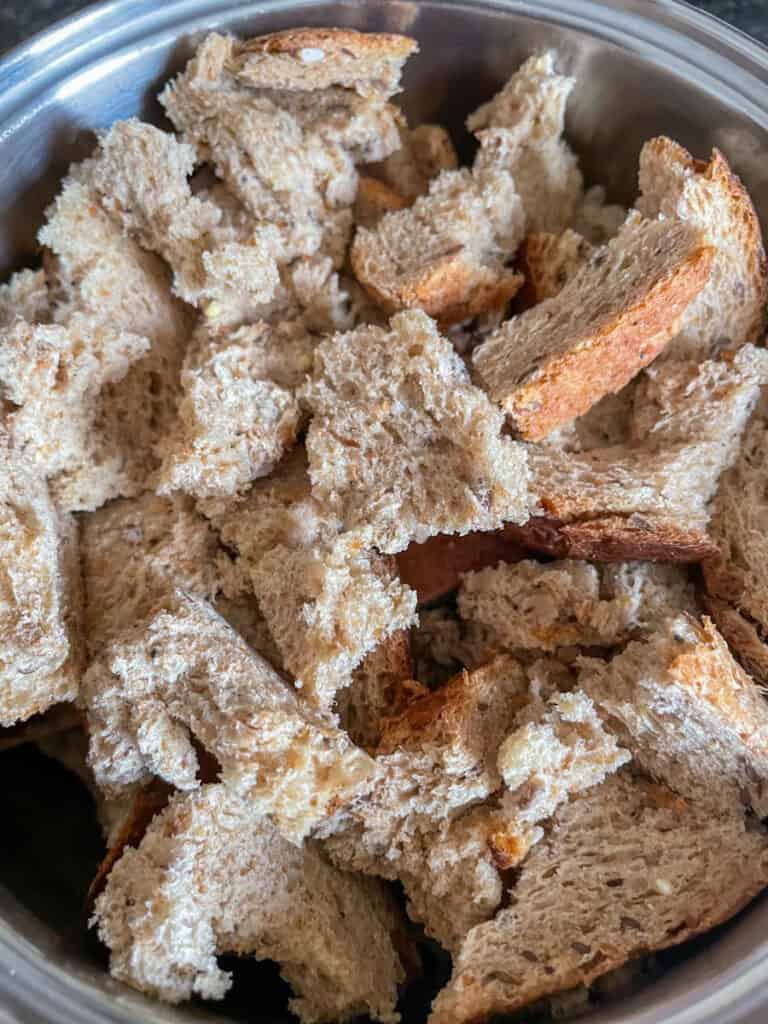
Step 1: Soak the bread chunks in water for 20 minutes. Squeeze the excess water out.

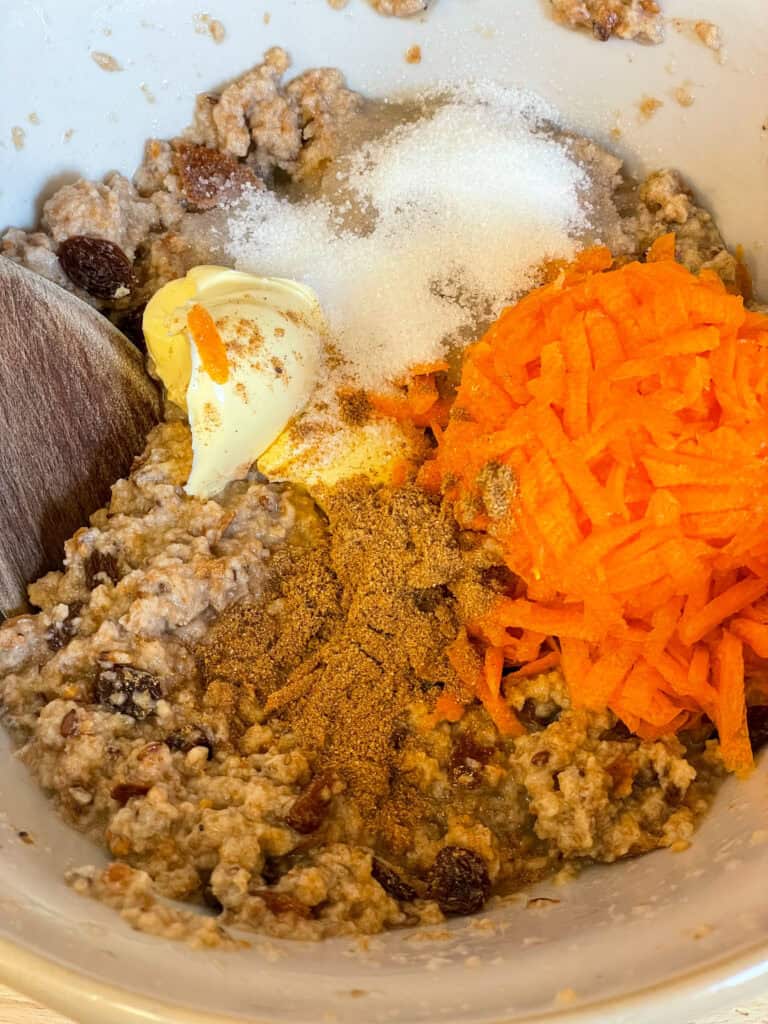
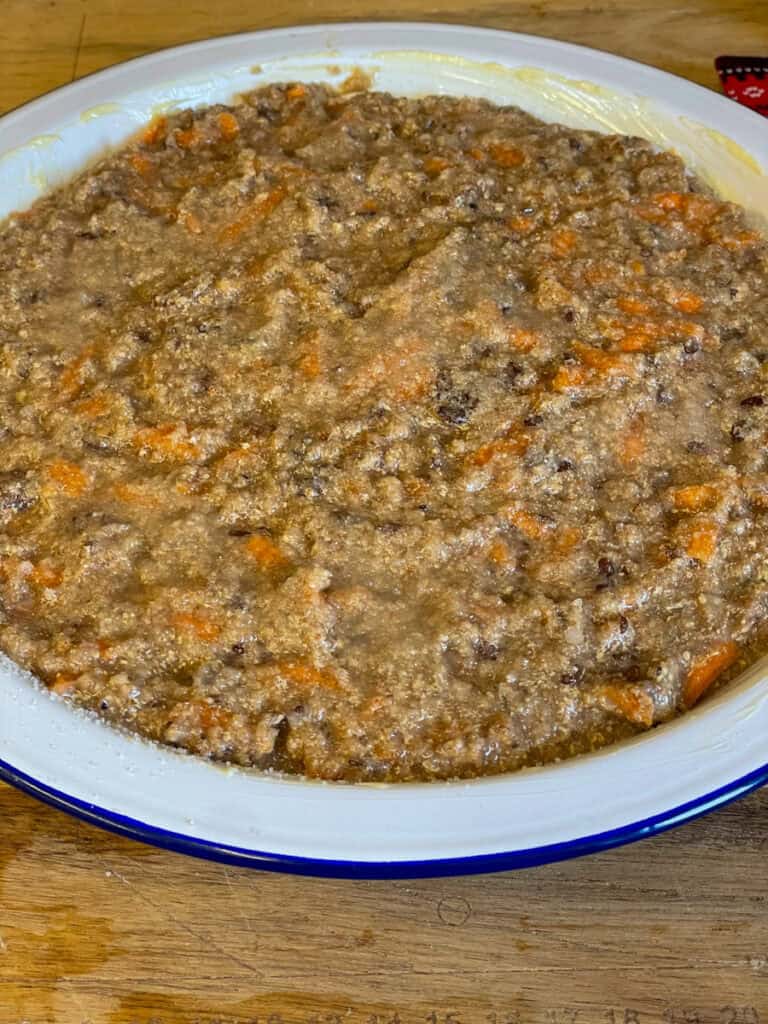
Step 2: Mix the mushed bread with raisins, grated carrot, sugar, mixed spice, and margarine.
Step 3: Mix bicarbonate of soda with a small amount of milk. Mix the milk through the bread mixture.
Step 4: Scoop the bread mixture into a pie dish. Sprinkle with sugar.
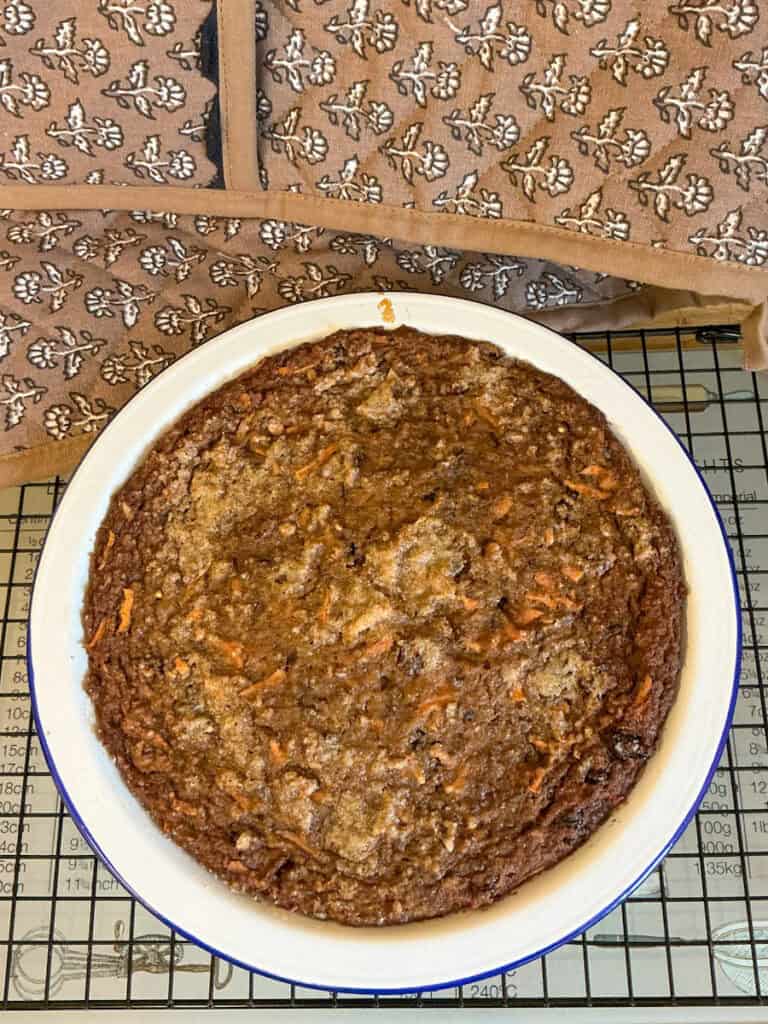
Step 5: Bake for 45-60 minutes.
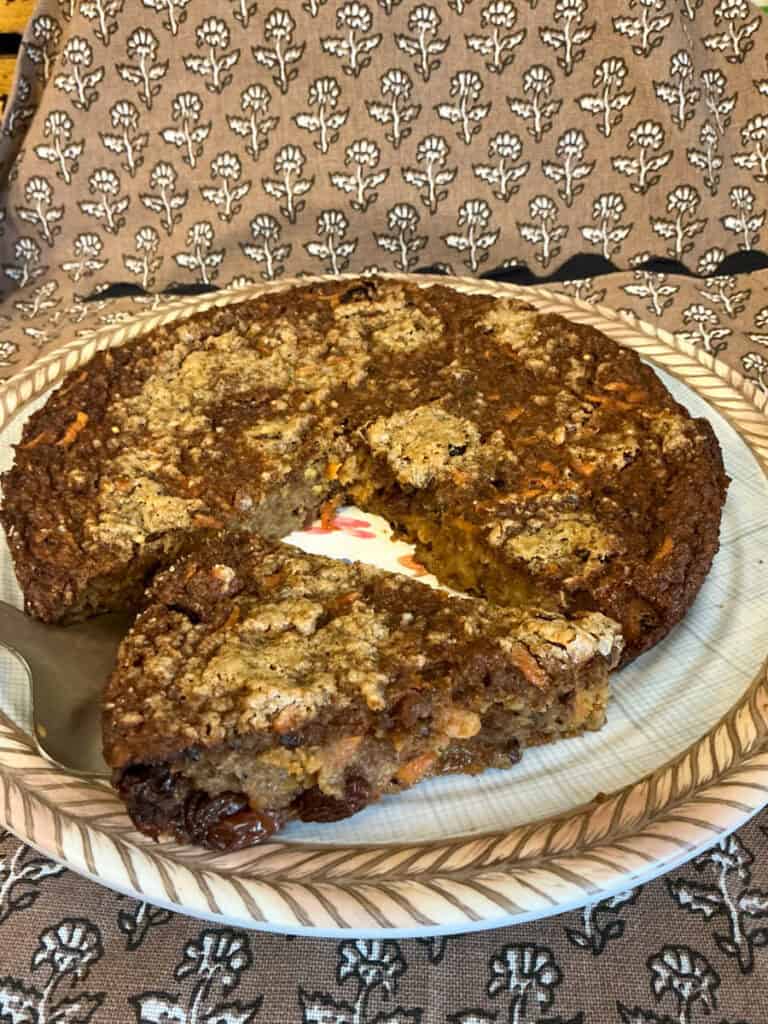
Step 6: Cool for about 15-20 minutes before slicing. Or leave to cool to room temperature where the pudding will firm up nicely.
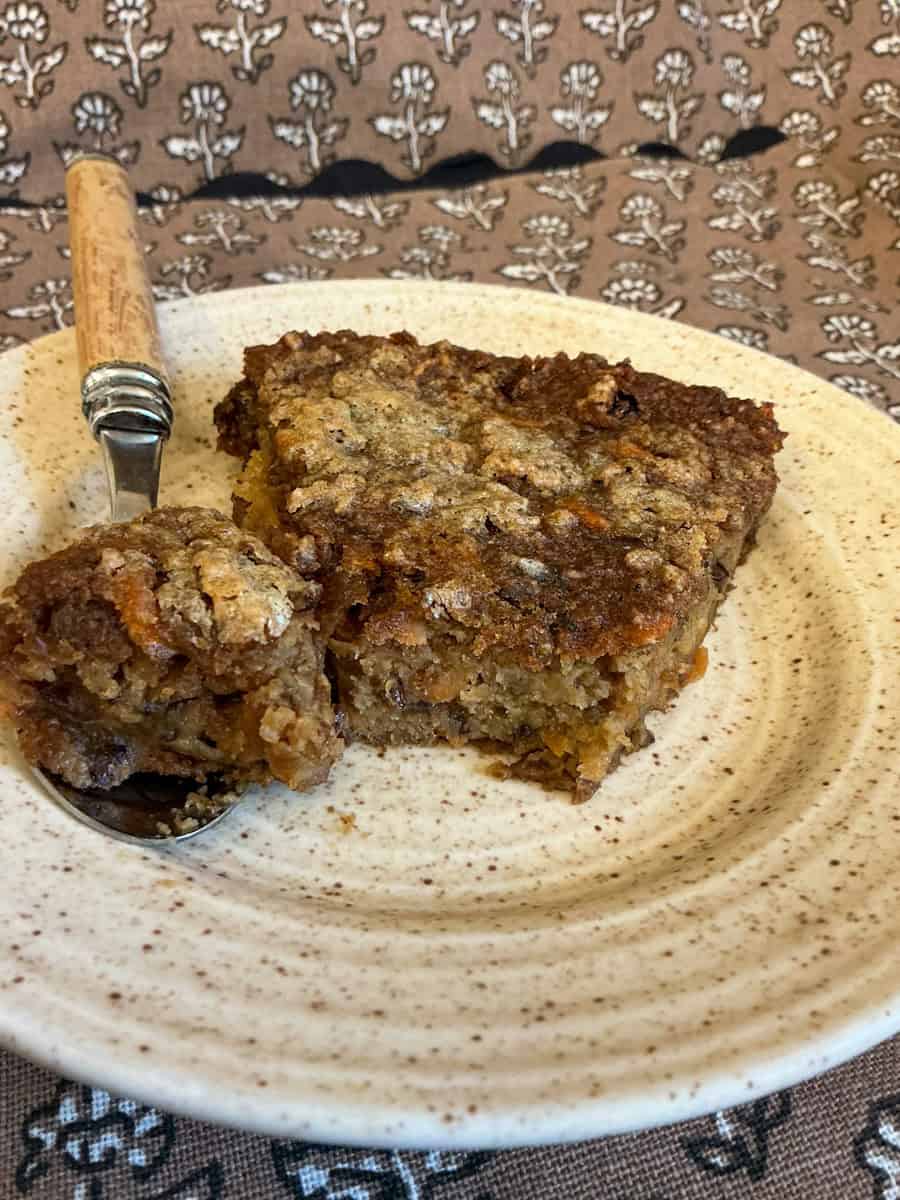
This Duke Pudding has crispy edges and a delicious soft moist French toast texture with warm spice flavours and lightly sweetened with sugar, carrots and raisins. It also tastes similar to a Scottish Clootie Dumpling.
In Scotland, a traditional accompaniment to a cooked breakfast or fry-up is something called a Scottish fruit pudding, which is prepared with a mixture of suet, dried fruit, oatmeal, and often warm spices such as cinnamon. Despite the name the fruit pudding is not a dessert, but a savoury-sweet pudding slice that is usually circular in shape and cooked by frying in a little oil.
As an alternative to a Scottish fruit pudding, slices of cold Duke Pudding can be fried on each side and added to a cooked breakfast, or enjoyed with some butter or margarine melted over and a pat of fruit jam.
This isn't as strange as it sounds as in Scotland slices of Christmas pudding or even stale fruit cake are often fried to accompany a cooked breakfast, as it makes good use of leftovers.
Traditionally, Duke pudding makes a nice light dessert and can be enjoyed warm, chilled or at room temperature. It slices beautifully so is perfect as part of a pack lunch or tuck box and enjoyed at work or school, or for an on-the-go snack or picnic.
***please note: for US measurements click the ' US customary button' within the recipe below, and the measurements will switch to tablespoons, cups, and ounces.***
📖 Recipe
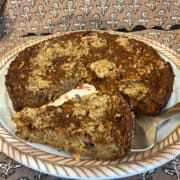
Duke Pudding (1940s Bread Pudding)
Equipment
- 8 inch (20cm) flan or pie dish
- Mixing bowl
- mixing spoon
- Cheese grater
- sieve or small-holed colander
- small bowls
- cutlery fork
Ingredients
- 275 grams bread (6 slices (or 2 cups of chopped bread packed into the cup measurements)of ordinary sliced shop-bought bread, keep the crusts on: use stale or near stale old bread - any type of bread can be used such as white, wholemeal, seeded bread etc)
- 2 tablespoons margarine or butter, softened (I used Flora original margarine which is dairy-free - ensure it is soft and at room temperature so it will easily stir into the pudding mixture)
- 4 tablespoons granulated sugar (or caster sugar or use a brown sugar)
- 85 grams grated carrot (about 2 small carrots or a very full overflowing ½ cup of packed in grated carrot)
- 1 teaspoon mixed spice (can replace with a different warm spice or mix such as cinnamon, ginger, or apple pie spice mix, use more if a stronger flavour liked)
- 45 grams dried fruit (3 tablespoons, I used raisins)
Mixed together:
- 1 teaspoon bicarbonate of soda (use a level measurement)
- 1 tablespoon milk (or add 2-3 teaspoons of water to an empty milk bottle or carton and shake to mix the last drops of milk with the water. I used soya milk but any milk can be used)
Topping:
- 1-2 tablespoons granulated sugar
Instructions
Soak the bread:
- Break the bread up into small chunks and add to a bowl. Pour in 2-3 cups of cold water (If using white bread you may only need 2 cups of water. Use enough water to soak the bread). Using a spoon mix the water through the bread and crush it into the water. Leave to soak for about 20 minutes.275 grams bread
Preheat the oven to 160 Fan, 180 ℃, Gas 4, 350℉
- Grease the flan or pie dish with margarine.
- Once the bread has soaked place it into a sieve over a bowl. Gently press the bread to drain the excess water. Try to remove as much water as possible but it will be a wet mixture.
- Add the bread mush to a mixing bowl. If it still looks too wet you can gently pat it with some kitchen paper to remove the excess liquid. You don't want any liquid pooling around the bread mush.
- Using a fork mix the bread and make sure any large chunks such as crusts are fully incorporated.
- Add the grated carrot, raisins, sugar, mixed spice, and margarine to the mixing bowl. Using a mixing spoon mix everything together.2 tablespoons margarine or butter, softened, 4 tablespoons granulated sugar, 85 grams grated carrot, 1 teaspoon mixed spice, 45 grams dried fruit
- Mix the bicarbonate of soda with the milk. Pour it into the mixing bowl and mix with the bread mixture.1 teaspoon bicarbonate of soda, 1 tablespoon milk
- Scoop the bread mixture into the greased pie dish and level out the top.
- Sprinkle the extra sugar over the top.1-2 tablespoons granulated sugar
Bake:
- Place the pie dish on the middle shelf of the oven.
- Bake for 45-60 minutes until firm on top and dark golden. If it looks like it will begin to darken too much add a layer of kitchen foil over the top. Exact baking times will vary for this recipe as it will depend on type of bread used and how stale the bread is as this will affect the amount of moisture the bread will soak up. Puddings with more moisture will require extra baking to allow the middle of the pudding to cook through and firm up. Baking times will also depend on the type of oven used so after 40-45 minutes start to check your pudding to see how it is progressing. I used a fan oven and my pudding was ready after 60 minutes. I also used seeded bread which resulted in a darker pudding. If you use white bread your pudding will bake lighter. If in doubt whether your pudding has baked enough just add some kitchen foil over the top and bake for longer. The outer edges will bake faster and they will become nice and crisp. The inside of the pudding will remain soft and moist but will be easy to slice and pick up once baked and allowed to cool.
- Cool the pudding in the dish for at least 15-20 minutes before removing if having warm. The pudding will continue to firm up as it cools. It is also delicious served at room temperature with a nice cup of tea.
Notes
- Please note that nutritional information is for guidance only and is not a strict calculation as it can vary depending on ingredients used. If precise data is required please consult your own calculations.
- Different breads and its staleness or freshness levels absorb different amounts of water and this can affect baking times as a wetter mixture will require a longer baking time. After soaking and squeezing, the bread should be damp but not dripping in water. The final mixture should be soft and spoonable similar to a thick gloopy cake batter. If your mixture feels too wet, pat it with some kitchen paper. If it is too dry mix through a small amount of extra milk.
- Any bread can be used but many people prefer to use white bread. I also like to experiment with wholemeal bread or seeded bread. For this recipe I used Farmhouse seeded bread Co-op brand. It currently costs (price was at the time of this post being published) 79p with a Co-op members card which I thought that was very good value, and the seeds provided extra nutrition and texture to the pudding. Gluten-free bread can be used.
- The original 1940s recipe only used 2 tablespoons of sugar for the Duke pudding mixture. However, I used 4 tablespoons as we prefer a sweeter pudding. I would still consider this pudding on the lighter sweeter side but it also has raisins and carrots for extra natural sweetness.
- The original recipe stated to add extra sugar on to the top of the pudding before it is baked. It didn't state exact amounts so I have used 1 tablespoon but your preferred amount can be used. The sugar provides a crisp outer texture.
- The grated carrot can be replaced with grated apple or pear.
- Serve warm with custard or warmed golden syrup, or ice cream.
- Serve at room temperature with a nice cup of tea.
- Store at room temperature, covered, for 1-2 days. Or store in an air-tight container and keep in the refrigerator for 3-4 days. As the pudding cools it will firm up especially if stored in the refrigerator.
- To reheat place in a warm oven until at desired temperature.
- To freeze: wrap in food safe wrap, and freeze for 2-3 months. Defrost at room temperature or within the fridge before reheating.
- In the 1940s, bread puddings, like this Duke pudding, would have been added to a tuck box or lunch box and enjoyed at work or school.
- Leftover suggestion:
- Leftover Duke pudding can be used as a vegan alternative to a Scottish fruit pudding (this is a traditional sweet-savoury pudding not intended for a dessert - rather it is fried and served with a cooked breakfast along with eggs, bacon, potato scones, baked beans, etc). To prepare - Fry slices of cold Duke Pudding with a little oil or cooking fat on each side. Traditionally, in many places in Britain leftover fruit cake, even Christmas pudding, is fried to accompany a cooked breakfast.
- Alternatively, fry the Duke pudding and enjoy with a pat of margarine melted over and a perhaps a dollop of fruit jam.
Nutrition
More frugal 1940s era bakes & puddings
I love 1940s and 1950s era bakes and puddings as they are just so frugal and fun to make. The recipes are so comforting and homely they really are just a warm reassuring hug that can brighten up even the most drechit day!. Drechit is an old Scottish word for wet and dreary!
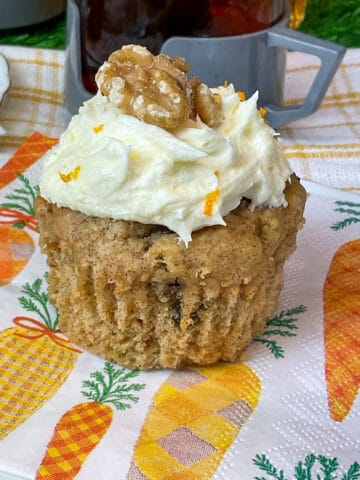
A few of our family favourites are these Old-Fashioned Carrot Cakes also known in Scotland as carrot buns and elsewhere as carrot cupcakes.
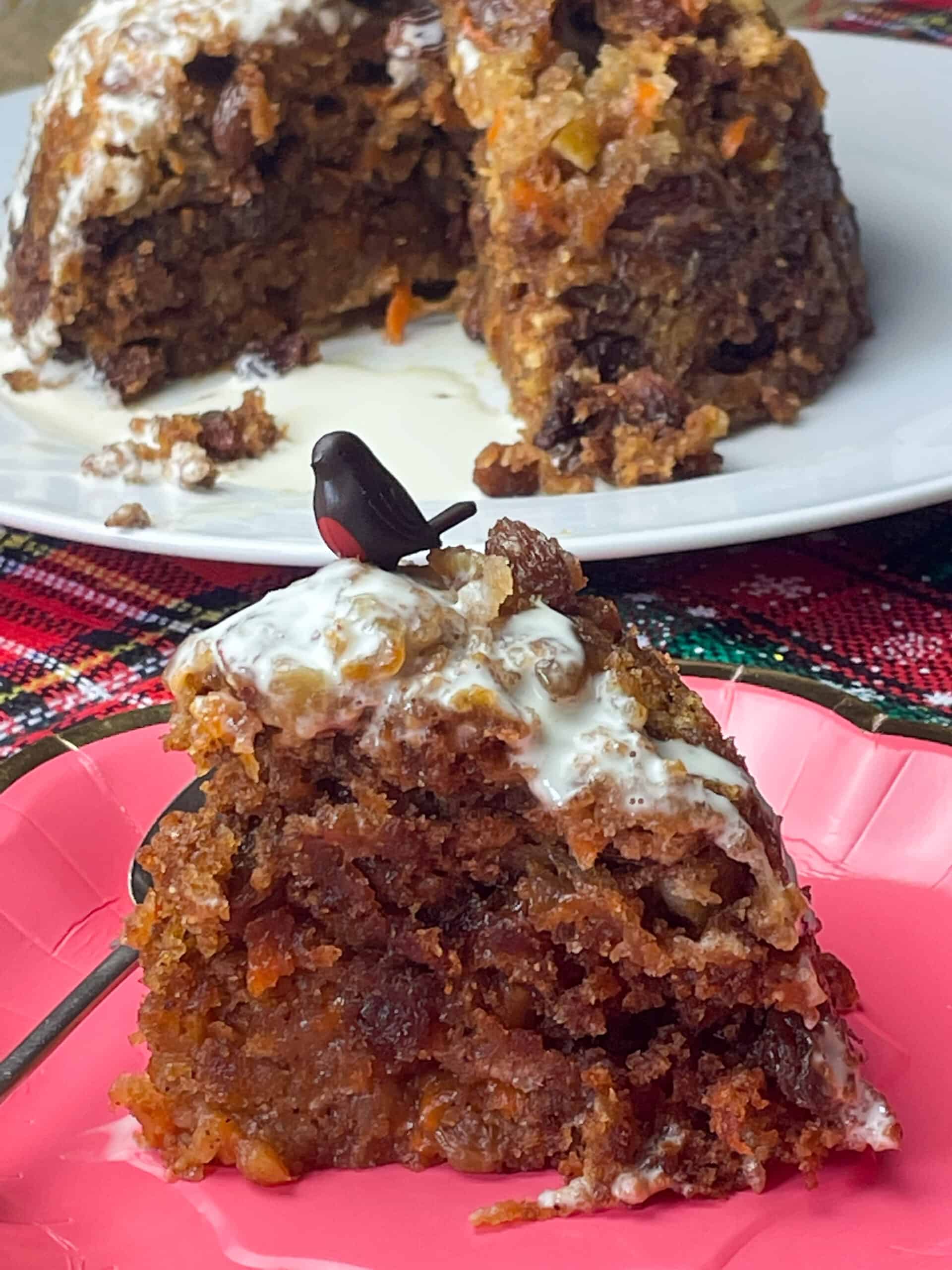
We also love these Old-Fashioned Chocolate Buns and this Old-Fashioned Christmas Pudding which is perfect for any time of the year as it is so light with toffee flavours. The Christmas pudding is prepared with potato, carrot and apple as it's another 1940s wartime classic!
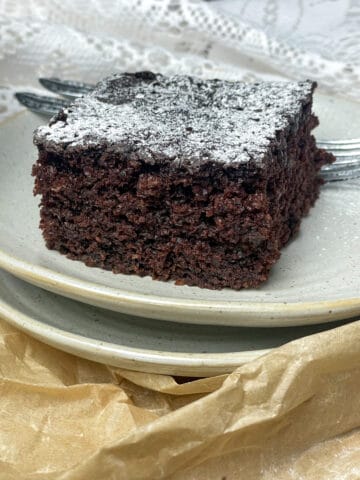
Lastly, we love this Chocolate Vinegar Cake which doesn't taste like vinegar at all! This vintage chocolate cake is super light and is prepared as an easy all-in-one-bowl chocolate cake. It's ideal for quick puddings.
All these recipes originate from 1940s British kitchen front cooking so are deliciously frugal and budget-friendly but very tasty and easy to prepare.

Comments
All our recipes are egg-free, dairy-free, and meat-free and easily adaptable to whatever ingredients you prefer - such as your usual milk, margarine or butter, or a simple swap for a similar ingredient.
Our recipes are perfect for vegans and vegetarians but also for anyone needing budget-friendly staple recipes that make use of less expensive ingredients.
Wartime recipes from the 1940s and 1950s are perfect for vegan, vegetarians and plant-based diets as they naturally had to re-create family staples that were egg and dairy-free.
As well as recipes that used less or no meat, meat-substitutes, or recipes that focused on vegetables as the main ingredient. These are the type of recipes that will thrive in today's economy.
Do let me know how you get on with the recipes I post. I do hope they are useful and helpful for your own home cooking and family. I use these recipes on a daily basis and love sharing them.
For more British wartime recipes have a look through our growing collection of vegan wartime recipes. More recipes will be added so do bookmark the webpage.
Drop a comment below I would love to hear from you. Thanks so much. And take gentle care of yourself. Love Jacq x


Jacq says
My family loves this vintage Duke Pudding but we would love to know what you think. It would be wonderful if you could drop us a comment below. Thanks so much Jacq x