
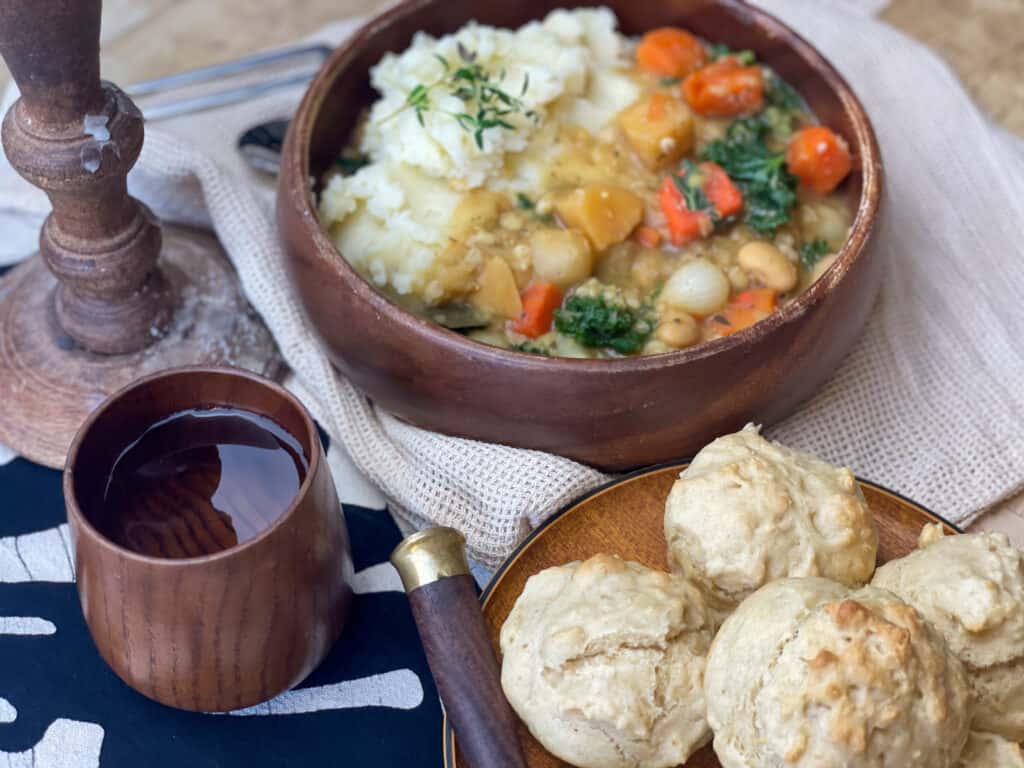
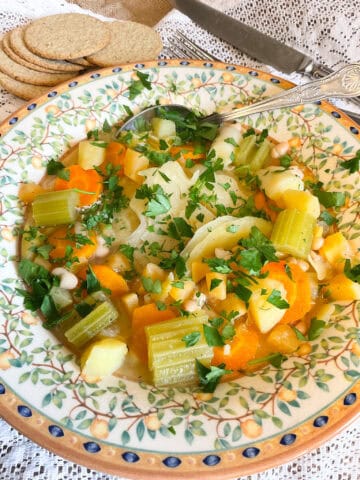
This British Medieval Inspired Potage Stew is based on medieval peasant stews. Our version is packed with root vegetables, kale, beans, lentils, barley and oats, and flavoured with vegetable stock, bay leaf, and fresh herbs. While some ingredients like lentils weren't widely available to medieval peasants they were an ingredient that was imported and used by wealthier families. Our recipe stays true to the adaptable make-do necessity of peasant cooking so we chucked in some lentils to our family potage! However, if preferred you can replace the lentils with peas or add in more oatmeal.

Jump to:
🏰 Why You'll Love This Medieval Potage
- 🪙 Budget-Friendly: Made with ingredients like root vegetables, grains, and pulses, this potage is filling, nourishing, and perfect for feeding a hungry household without spending a fortune.
- ⚖️ Easily Adaptable: Just like medieval cooks, you can use whatever you have on hand so swap out the beans, herbs, or grains to suit your pantry.
- 📜 A Taste of History: Step back in time with every spoonful this recipe is inspired by medieval food, bringing the flavours of the past into your kitchen.
- 🛡️ Themed Dinner & History Fun: Whether it's for a medieval feast night, homeschool project, living history lesson, or a 🧝 Lord of the Rings watch party, this stew is perfect.
- 🎃 Halloween-Ready: Serve bubbling from a cauldron or inside mini pumpkins for a festive and spooky touch that little (and big!) knights and witches will love.
- 🌱 Naturally Vegan-Friendly: Medieval peasants often went without meat not by choice, but necessity.
- 🥣 Packed with Goodness: Full of fibre-rich vegetables, protein-packed pulses, and hearty grains like barley and oats.
📜 What is Medieval Potage or Pottage?
Click the toggle '📜' below to find out more.
📜 What is Medieval Potage or Pottage?
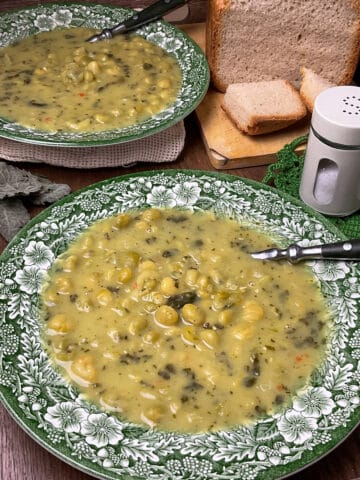
Medieval potage stew has been around since at least the 14th Century, originating in France and it is claimed to have been adopted by the British. Potage can be spelt with either one t or two t's as in pottage. The word potage is actually an newer spelling variation and potage translates from French to simply mean 'food cooked in a pot'. The food cooked in the pot would have been the same as a stew, soup or porridge, or something in between. Although, a potage tends to lean more towards the thicker spectrum of stews. In our house our wooden spoon can stand up straight with added to our extra thick potages, stews, and even soups! The historian Maggie Black (1993) describes that some fancier medieval potages were so thick that it could be sliced. However, peasants often had to make do with runnier potages often prepared with old garden peas.
Medieval peasants did not have meat as an everyday staple instead they had to rely on a few vegetables, such as cabbages and kale, leeks, lettuce (which was more commonly cooked rather than eaten raw), herbs known as pot-herbs, onions and garlic, and grains, such as barley, oats, and peas. Peasants would have been unlikely to have afforded to add meat to their potage, except for really special occassions, and would have chucked in any edible greenery and vegetables they could afford, grow, trade or forage around their local environment. Although, when meat was available it would have been included along with the vegetables, grains, pulses, and herbs, and boiled with broth. Many people claim that turnips were not available during the medieval times but Maggie Black (1993) describes that medieval gardens grew many kinds of root vegetables including turnips and carrots.
Richer folk also ate their daily potages as it was not regarded as just food for peasants. The potage would have been cooked in a cast-iron cauldron pot over an open fire or fireplace with a large wooden spoon used to stir the potage. Thick slabs of bread called trenchers were often used as plates and the potage ladled directly onto the hard bread. The bread was rarely eaten by the richer folk but was often donated to peasants or beggars.
To flavour potages medieval cooks commonly used salt, pepper, and mustard, and herbs from the garden. Richer folks used imported spices such as cinnamon, cloves, and ginger, and sugar even for savoury meals.
The idea of medieval food and life is one that is interesting to many people and historical films and movies often portray the potage meal. Whenever there is a dinner scene during a historical movie, that involves feeding peasants, its generally a potage slop type meal that is served up! There is an episode of AMC's Into the Badlands series (Season 2 episode 1) where the mine prisoners are fed what looked very similar to our potage stew recipe! Our daughter got quite excited when she saw the potage slopped onto the dinner plates as she loves medieval history. If you have a family member who is a medieval, knights, King Arthur, Robin Hood, Lord of the Rings, or living history fan and enthusiast, then this recipe is ideal and is so much fun especially served in wooden bowls or platters of hard stale bread.
📖 Further reading:
- Maggie Black (1993) A Taste of History 10,000 Years Of Food In Britain
- Peter Brears (2020) Cooking & Dinning in Medieval History
A great idea for Halloween parties or gatherings is to serve this potage in a hollowed out pumpkin or little individual pumpkins. Kids will love preparing this potage and mixing the cauldron saucepan!
🗒️ Ingredient Notes
- Vegetables: We often use a frozen root vegetable mix for convienence and kale. Medieval vegetables you can use include: green and red cabbages, carrots, turnips, parsnips, leeks, kale, leeks, lettuces, onions, & garlic.
- Grains/Cereals: We use pearl barley and pinhead/steel-cut oatmeal as these types of grain were medieval staples.
- Pulses: We use butterbeans and red split lentils. However, lentils were only really available to wealthier folks so you can replace those with cooked old garden peas or cooked split green peas or cooked marrowfat peas. We say cooked as these types of peas take awhile to cook but of course you can prepare a longer cooking potage. Butterbeans were not medieval staples but broad beans were so you can use those instead. We had difficulty sourcing broad beans on our Scottish island home but we have used broad beans for this recipe since first publishing.
- Flavourings: We have used yeast extract which is not medieval but you can replace this with prepared mustard from a jar. Mustard was a common medieval staple. We also use vegetable stock or broth which would have been available in medieval times albeit this would have been prepared from scratch likely at the same time as the potage i.e. the herbs and such flavoured the liquid cooking the potage, or it was saved from another meal. We have also used gravy powder simply for flavour and convience but this can be replaced with extra oatmeal which will thicken up the potage, and for extra flavour you can add in extra herbs.
- Herbs: We like to use rosemary and thyme, bay leaf, parsley, and mixed dried herbs, for our potages but any herbs, edible plants such as dandilions, nasturtiums & nettles, can be added.
- Serving suggestions: We often like our potage with mashed potatoes but of course potatoes would not have been available in medieval times. You could make a root vegetable mash instead or serve the potage with thick slices of brown rustic bread or if you are feeling fancy have some white crusty but soft bread (this type of bread was usually only available to richer folk!) oatcakes, cheese, and some hazlenuts which would have been collected wild in medieval times!
🔪 How to Prepare
The beauty of potage is that it can be as simple or as inventive as you like. Just like in medieval peasant cookery no two potages will be the same so each time you prepare it, it will be like an evolving creation which will just get tastier as you practice.
Our daughter loves the medieval ages so she is the potage creator in the family. Any size cooking pot or pan can be used depending on what you have and how many you are cooking for. Also, it is up to you how much vegetables, grains, beans, herbs, etc., you'd like to add. There is absolutely no wrong way of making potage.
Everything and anything edible can get added even local edible wild plants such as dandelion or nettle would be perfect after a good wash of course. To make your potage even more economical use cut-price vegetable from your local supermarket as well as look out for vegetables in season as they tend to be less expensive.

Step 1: Gather and prepare you chosen vegetables. To save time and effort we often like to use a bag of ready prepared frozen or fresh root veg mix.
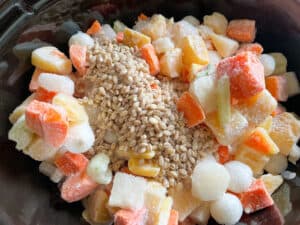
Step 2: Add the vegetables and barley to a large soup pot.
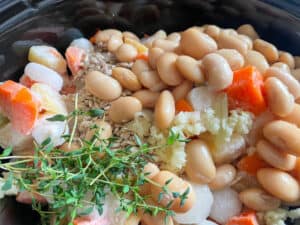
Step 3: Add in the butterbeans, minced garlic, and fresh herbs.
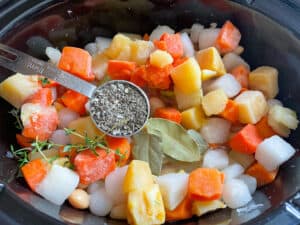
Step 4: Add mixed dried herbs or fresh herbs and the bay leaf.

Step 5: Add in the lentils (or peas if using instead) and stock cubes.

Step 6: Pour in the water and add in the vegetable extract or Marmite.
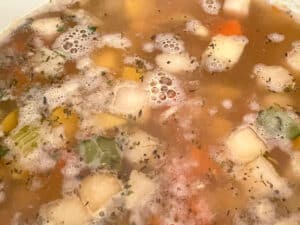
Step 7: Bring to the boil and simmer for 30 minutes.
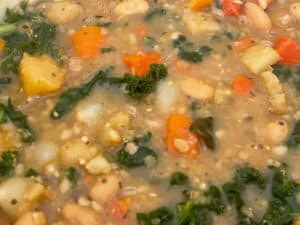
Step 8: Add oatmeal, gravy powder and chopped kale.
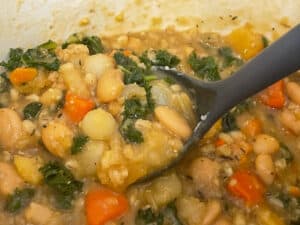
Step 9: Simmer for 5-10 minutes. Season with salt and pepper to taste.
📜 Another historical pottage recipe
📜 For another British historical pottage recipe do have a look at our easy Winter Vegetable Pottage which is a classic 17-18th century pottage recipe that likely dates back further. 📜
✨ Love traditional recipes with a cosy, vintage feel?
Explore my new Vintage Recipe Card Series Re-Made Vegan, where I remake vintage & retro British dinners and puddings from 1960s-1990s recipe box set cards into easy, plant-based versions. I include images of the original recipe cards including the original recipe so if your just interested in looking at the recipe cards for fun or research then do pop over and have a look at all the old British recipes.
🍽️ Click here to see week one's recipes →
***please note: for US measurements click the 'US customary button' within the recipe and the measurements will switch to tablespoons, cups, and ounces.***
📖 Recipe

Medieval Potage Stew
Equipment
- Large saucepan/ stockpot/ soup pan
- mixing spoon
Ingredients
- 1 kilogram vegetables (such as carrots, turnip, leeks, cabbage, onions, garlic, chopped into chunks)
- 100 grams pearl barley
- 90 grams red split lentils (washed and drained - can replace with precooked marrowfat peas or green split peas)
- 1 can butter beans (400g/14 oz can, drained - can replace with broad beans either fresh or frozen which are a medieval bean)
- 3 tablespoons pinhead oatmeal (or rolled oats - can add in more for the last 5 minutes of cooking if a thicker potage is required)
- 75 gram kale (or cabbage)
- 2 bay leaf
- 1 tablespoon dried mixed herbs (or a big bunch of fresh herbs - we like thyme, rosemary, sage & parsley)
- 1 teaspoon yeast extract (can replace with prepared mustard from a jar - mustard was a very common condiment in medieval times)
- 1.6 litres vegetable stock 6 ¾ cups / 3.4 UK pints / 1.7 US quarts
- 3 tablespoons vegan gravy powder (can omit and replace with extra oatmeal and add in extra herbs for flavour)
Instructions
- Add all the ingredients to your pot, except the kale, oatmeal and gravy powder.1 kilogram vegetables, 100 grams pearl barley, 90 grams red split lentils, 1 can butter beans, 2 bay leaf, 1 tablespoon dried mixed herbs, 1 teaspoon yeast extract, 1.6 litres vegetable stock
- Bring to a gentle boil and cook for 30 minutes.
- Add the gravy powder, oatmeal and kale. (If your gravy powder requires mixing with a little cold water before adding to stews then follow the packet instructions before adding to the potage as this will prevent gravy lumps!)3 tablespoons pinhead oatmeal, 75 gram kale, 3 tablespoons vegan gravy powder
- Simmer for 5-10 minutes. If the stew starts to stick to your pot add an extra half cup of stock to loosen the stew. Or place a lid on your pot and remove from the hotplate. Leave the saucepan to sit for 10 minutes or so to finish cooking in the residual heat.
- Potage stew will be much thicker than normal stew but if preferred add extra vegetable stock to loosen it up. If you find that your potage is too thin for your likely you can thicken it up with extra tablespoons of oatmeal and stew until thick. The potage will also thicken as it is removed from the heat and allowed to rest.
- Remove the bay leaf and any hard herb stalks. Check the seasoning and add salt and pepper to taste. Medieval folks also used mustard as a condiment so add that as well if liked. Garnish the potage with any fresh herbs you may have left.
Notes
- Nutritional information is provided for guidance only and is not a strict calculation as ingredients vary.
- Potage stew can be kept fresh in the fridge, in a covered container, for up to 3 days.
- Reheat in a saucepan, simmering until piping hot throughout. Add a little extra stock or perhaps some milk to loosen up the stew if it is very thick.
- We are a plant-based family and we use vegan-friendly ingredients so we do not add meat or meat products to our recipes but of course if you have different dietary requirements you can add chopped meat or meat stock to your potage.
- Medieval ingredient info:
-
- Vegetables: We often use a frozen root vegetable mix for convienence and kale. Medieval vegetables you can use include: green and red cabbages, carrots, turnips, parsnips, leeks, kale, leeks, lettuces, onions, & garlic.
- Grains/Cereals: We use pearl barley and pinhead/steel-cut oatmeal as these types of grain were medieval staples.
- Pulses: We use butterbeans and red split lentils. However, lentils were only really available to wealthier folks so you can replace those with cooked old garden peas or cooked split green peas or cooked marrowfat peas. We say cooked as these types of peas take awhile to cook but of course you can prepare a longer cooking potage. Butterbeans were not medieval staples but broad beans were so you can use those instead. We had difficulty sourcing broad beans on our Scottish island home but we have used broad beans for this recipe since first publishing.
- Flavourings: We have used yeast extract which is not medieval but you can replace this with prepared mustard from a jar. Mustard was a common medieval staple condiment, along with salt & pepper. We also use vegetable stock or broth which would have been available in medieval times albeit this would have been prepared from scratch likely at the same time as the potage i.e. the herbs and such flavoured the liquid cooking the potage, or it was saved from another meal. We have also used gravy powder simply for flavour and convience but this can be replaced with extra oatmeal which will thicken up the potage, and for extra flavour you can add in extra herbs.
- Herbs: We like to use rosemary and thyme, bay leaf, parsley, sometimes sage, and mixed dried herbs, for our potages but any herbs, edible plants such as dandilions, nasturtiums & nettles, can be added.
- Serving suggestions: We often like our potage with mashed potatoes but of course potatoes would not have been available in medieval times. You could make a root vegetable mash instead or serve the potage with thick slices of brown rustic bread or if you are feeling fancy have some white crusty but soft bread (this type of bread was usually only available to richer folk!) oatcakes, cheese, and some hazlenuts which would have been collected wild in medieval times!
Nutrition
❓ FAQS
Yes, but ensure all your ingredients are gluten-free especially your vegetable stock, gravy powder and any other flavourings you choose to add. Also if using oats then check that the oats are certified gluten-free. Barley does contain gluten so do double check any ingredients used to ensure that they are safe for gluten-free diets.
🏺 More recipes with medieval origins!
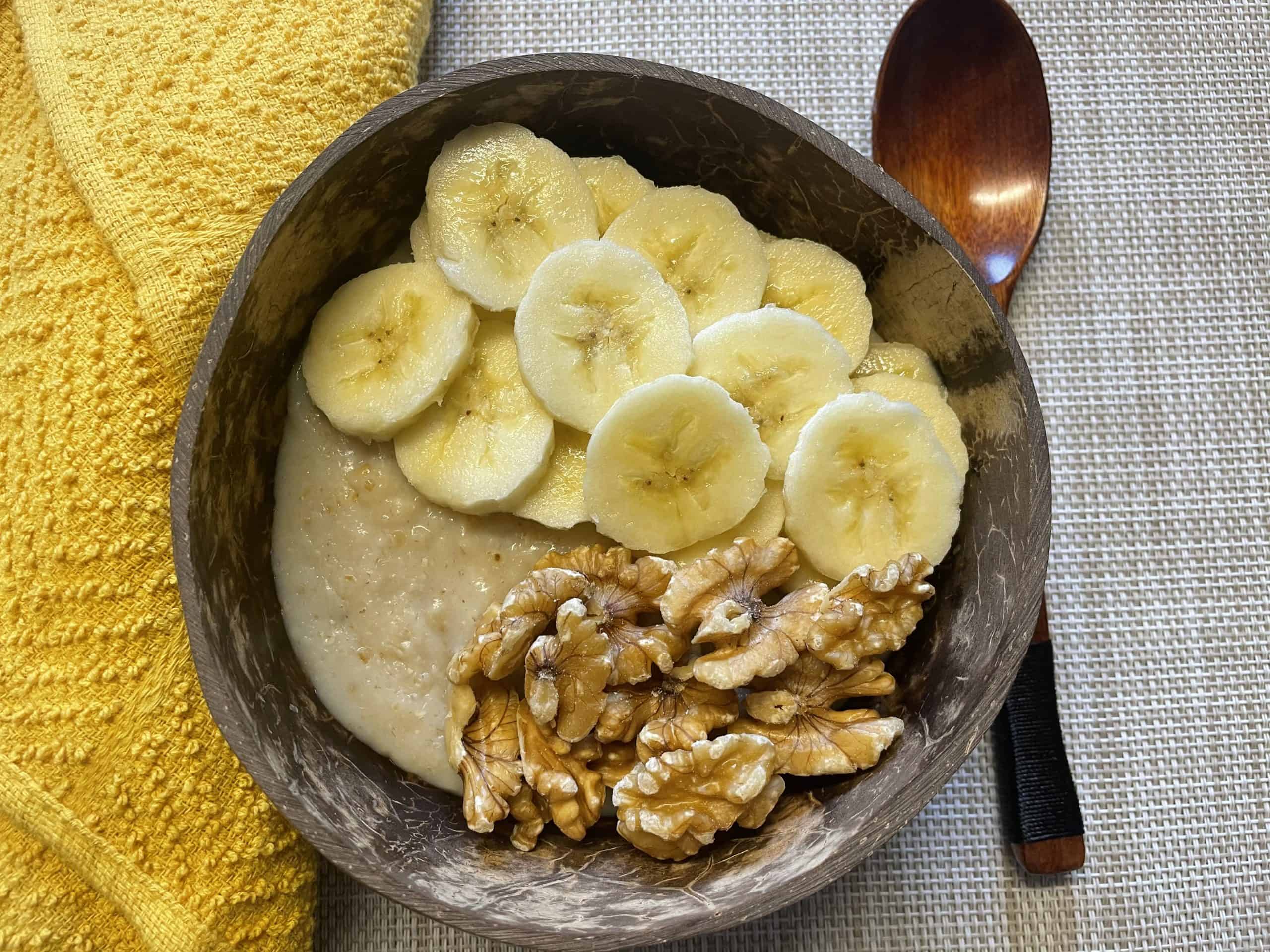
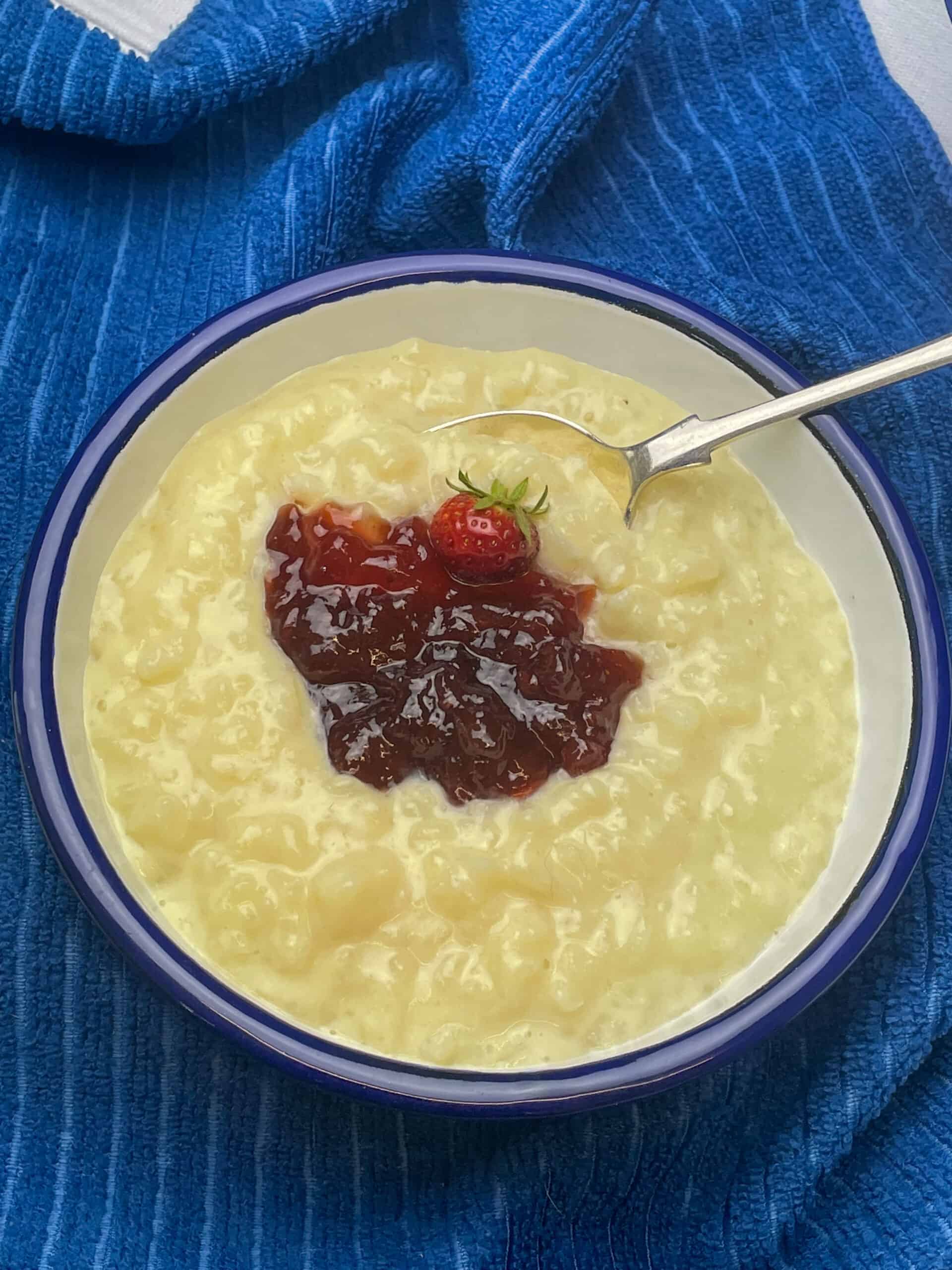
We love recipes that originated in British medieval times, (especially peasant food as we know we would have been peasants back then!)so we have a few more of our family favourite recipes to share with you. This Pea Soup is nice and thick and similar to a pease potage and as we are Scottish we have our family recipe for traditional Scottish porridge. We love porridge for breakfast but it also makes a nice lunch and supper meal. For medieval style puddings we love this Rice Pudding and this Barley Pudding.
RC says
I made this recipe today. I used cannellini beans and red lentils as the pulses and a little more than a tablespoon of rosemary and sage as my main herbs. I also included some spinach instead of kale and added in some fresh parsley and dried mustard powder. I used six tablespoons of oatmeal and no gravy powder. The times mentioned in this recipe were spot-on from my perspective. From a serving size perspective, this will yield 9 servings in total for one adult and two senior adults (essentially three meals).
What I appreciated most about this recipe was how little clean-up was required. I took the advice given and used frozen root vegetables. For a recipe that came out as good as this one did with so very little clean-up, no cutting board, no extra bowls, etc., I have to give it a big thumbs-up and a "thanks" as well. 🙂
Jacq says
Hi RC! You are most welcome. Thanks for your detailed comment. I love finding out about how my recipes are being used. Sometimes I hesitate to write 'my' recipes as I like to think of them as 'our' recipes as I am sharing the recipes with all my lovely blog visitors. I try to aim for my savoury recipes to be easy to adapt but still provide consistent results, so I am glad the changes you made worked out well. Thank-you for taking the time to comment. Jacq x